 Rollme Rollme
Direct from China's leading R&D manufacturing facility. Certified for accuracy, battery efficiency, and international compliance.
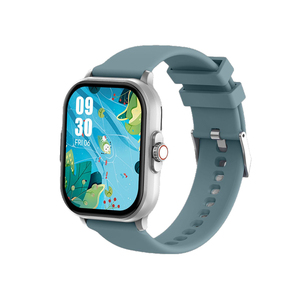
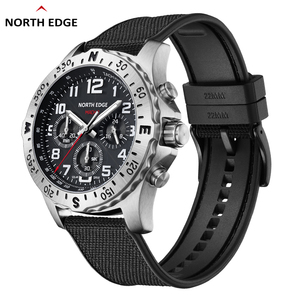
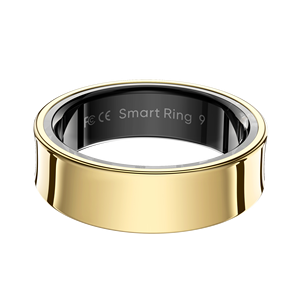
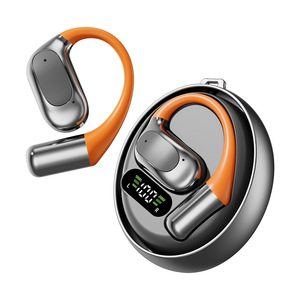
An Engineering & Supply Chain Benchmark for International Brand Buyers, OEM Importers, and Retail Chains
Over the past decade, China has transitioned from a high-volume assembly hub into the global epicenter of biometric sensor R&D and intelligent wearable micro-electronics. Peripheral oxygen saturation (SpO2) tracking—once restricted to bulky bedside medical pulse oximeters—is now seamlessly integrated into ultra-compact, water-sealed smartwatches, hybrid sport chronometers, and titanium smart rings. For global distributors, brand owners, and medical device importers, sourcing SpO2 smartwatches from Tier-1 Chinese manufacturers offers an unparalleled competitive advantage in cost-efficiency, optical sensor precision, rapid firmware iteration, and international regulatory compliance (including ISO 13485, CE-MDR, and FDA Class II pre-market frameworks).
Modern reflective Photoplethysmography (PPG) deployed by leading original equipment manufacturers (OEMs) utilizes multi-wavelength optical arrays (red light at ~660 nm and infrared light at ~940 nm) paired with high-gain photodetectors. By measuring the differential light absorption ratios of oxygenated hemoglobin (HbO2) versus deoxygenated hemoglobin (Hb) during arterial blood pulsation, contemporary Chinese smartwatch platforms achieve clinical-grade oxygen saturation tracking under dynamic conditions.
Integration of dual Red/IR LED arrays combined with high-sensitivity VCSEL emitters ensures high Signal-to-Noise Ratios (SNR) even across dark skin tones or hyper-perfusion conditions.
Combining SpO2 monitoring with single-lead ECG, continuous cuffless blood pressure trend detection, continuous glucose indicator tracking, and skin temperature monitoring on a single MCU architecture.
Precision CNC-machined titanium, zinc-alloy, and aerospace aluminum cases engineered for 5ATM / IP68 submersion, passing MIL-STD-810H thermal shock and vibration standards.
From Static Measurement to Real-Time Motion-Artifact Compensated Hypoxia Screening
Early-generation SpO2 wearables suffered from high sensitivity to movement, ambient light interference, and low peripheral micro-circulation. Today, top Chinese smart watch exporters have overcome these limitations through hardware-level optical isolation, algorithmic motion noise cancellation, and low-power edge computing chips.
| Architecture Phase | Optical Sensor Component | Motion Artifact Handling | Power Consumption | Primary Sourcing Use Case |
|---|---|---|---|---|
| Gen-1 Wearable (Legacy) | Single Green LED PPG | Software averaging filter (High latency) | ~15mA continuous | Basic wristband step-tracking & resting pulse |
| Gen-2 Smartwatch | Dual Red + Infrared LED Array | 3-Axis Accelerometer feedback cancellation | ~8mA continuous | Fitness tracking, spot-check SpO2 readings |
| Gen-3 Medical-Grade (Current) | Multi-channel VCSEL + 4-PD Matrix | 6-Axis IMU + AI Neural Network Filtering | < 2.5mA optimized | Continuous sleep apnea (OSAHS) & high-altitude hypoxia alert |
| Gen-4 Integrated Form (Smart Ring) | Miniaturized Micro-PPG on Flexible PCB | Direct digital signal processing (DSP) embedded | < 1.2mA continuous | Discreet 24/7 recovery monitoring, fashion wearables |
Leading Chinese wearable manufacturers no longer present raw SpO2 data as simple percentages. Advanced firmware platforms continuously correlate nocturnal blood oxygen dips with heart rate variability (HRV) and respiratory frequency. When blood oxygen saturation drops by >3% to 4% within a 10-second window alongside an autonomic pulse surge, the algorithm flags an apneic event. This raw-data insight gives B2B importers a distinct selling proposition (USP) in European and North American consumer health markets.
Navigating Next-Generation Form Factors, Non-Invasive Biosensing & Regulatory Evolution
As international buyers evaluate OEM contracts for 2025–2030, procurement strategies are shifting dramatically. Simple step-counting smartwatches have become commoditized. Value creation and higher profit margins now reside in specialized health-tech segments and hybrid form factors.
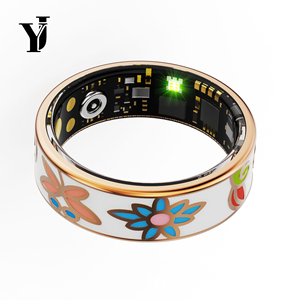
Distributors are expanding product lines beyond wristwear into titanium and enamel alloy smart rings. Operating with zero screen-glare and offering superior PPG skin contact, smart rings capture continuous nocturnal SpO2 with high compliance.
Combining multi-wavelength optical absorption with pulse transit time (PTT) calculations allows progressive smartwatches to offer non-invasive blood glucose trend indicators and cuffless blood pressure tracking alongside traditional SpO2.
Modern SpO2 smartwatches incorporate voice synthesis, translation, and localized LLM prompt interfaces (e.g., ChatGPT wrist integration) to elevate daily engagement and transform watches into productivity hubs.
Uncompromising Manufacturing Quality, Intellectual Property Protection, and Global Logistics
Partnering with a top-tier Chinese manufacturer guarantees robust intellectual property safeguarding alongside strict production control. Our R&D ecosystem houses over 10 core technology patents and 50 industrial design patents, proving our commitment to long-term hardware innovation rather than off-the-shelf cloning.
Automated surface-mount technology (SMT) lines operating under Class 100,000 dust-free cleanroom environments guarantee optical optical-sensor alignment down to 5-micron tolerances.
Every single watch case undergoes high-pressure air-leakage and hydro-static submersion testing to verify 3ATM, 5ATM, or IP68 ratings prior to package encapsulation.
We supply complete iOS and Android SDKs, customizable companion apps, localized cloud API hooks, and white-label branding for seamless cloud database integration.
Key Technical and Commercial Answers for International Sourcing Managers