Strategic Procurement Checklist Essential Sourcing Evaluation Metrics for Global AI Earbud Procurement
A quantitative framework for evaluating original design manufacturers (ODM) and OEM suppliers in the smart wearable sector.
When sourcing AI Open-Ear Earbuds at scale, procurement officers must look beyond surface aesthetic samples. Integrating artificial intelligence software pipelines into wearable hardware introduces unique failure modes that traditional audio factories are ill-equipped to resolve. Evaluate prospective manufacturing partners across five core technical pillars:
1. Hardware-Level Acoustic Performance & Driver Sizing
Unlike sealed in-ear designs where 6mm to 10mm drivers suffice, open-ear acoustics demand larger diaphragms to move sufficient air without distortion. Ensure your manufacturer utilizes 14.2mm, 15.4mm, or 16mm composite dynamic drivers with titanium-plated domes. Demand frequency response curve plots (20Hz–20kHz) recorded via ITU-T P.57 artificial ear simulators to verify bass performance below 100Hz.
2. Micro-Camera Thermal Management & EIS Video Capture
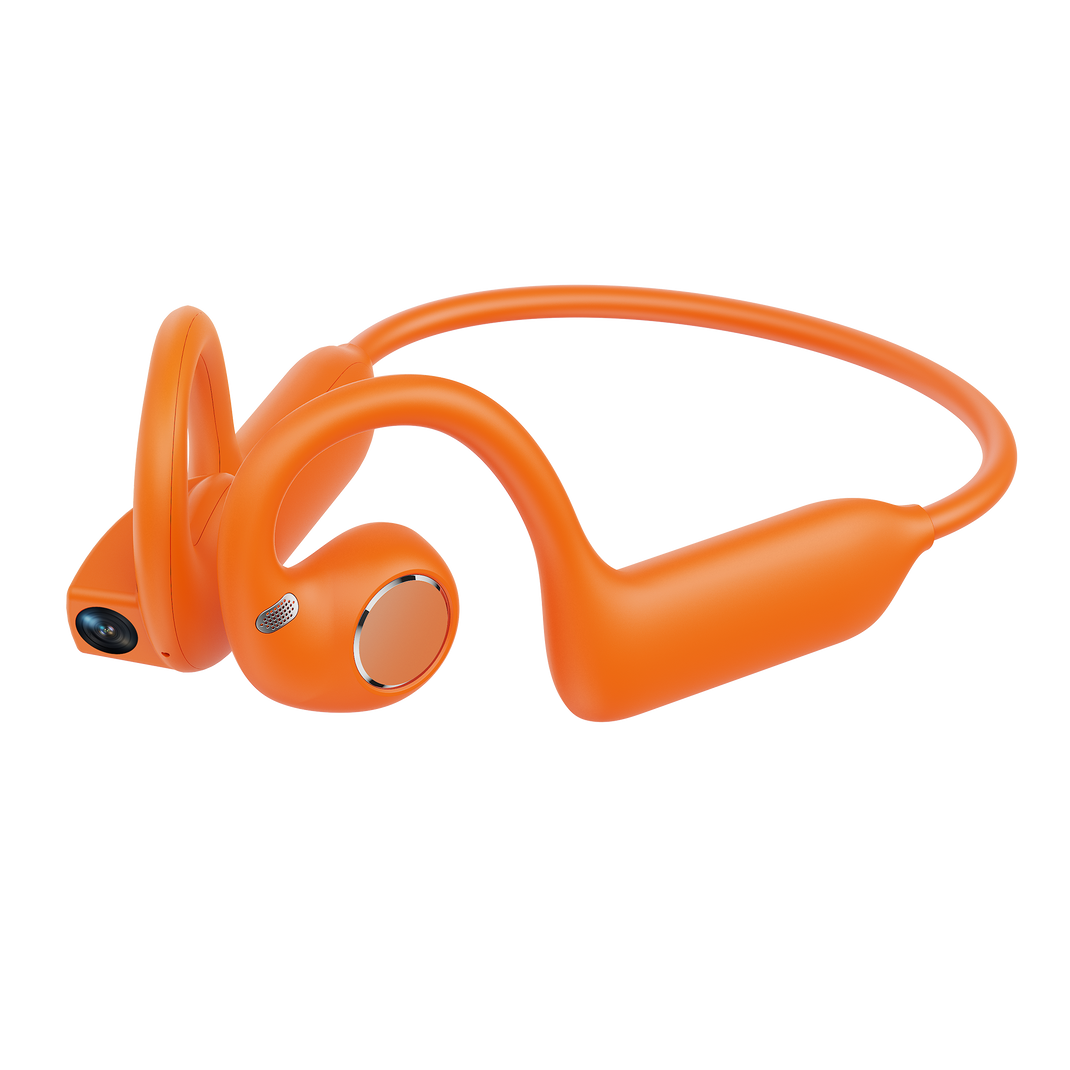
For hybrid AI open-ear devices equipped with cameras (such as the Rollme AirCam), thermal dissipation is a chief engineering constraint. Continuous 1080P video processing combined with image sensor operations generates localized heat. Reliable suppliers employ copper vapor chamber (VC) spreaders and custom graphite sheets to keep skin-contact temperatures below 41°C during extended usage.
3. Cloud API Middleware & Latency Optimization
The user experience of voice translation or visual AI query hinges on end-to-end latency (Speech-to-Text -> LLM Inference -> Text-to-Speech). Leading manufacturers supply robust iOS and Android companion SDKs connected to high-availability server clusters (AWS, Azure, Google Cloud), maintaining total request-to-response round trips under 600 milliseconds globally.
4. Battery Chemistry and Charging Cycle Endurance
Given the power footprint of continuous Bluetooth 5.4 streaming and edge AI processing, cell quality directly impacts product lifespan. Demand high-density lithium-ion pure cobalt battery cells rated for over 500 charge cycles while maintaining >80% capacity. Charging cases must feature overvoltage protection (OVP), overcurrent protection (OCP), and thermal cutoffs.
5. Regulatory Compliance & IP Patent Protection
Distributors risk severe customs seizures and patent infringement suits if products violate existing acoustic or industrial design patents. Partnering with established brands like Rollme—holding over 10 core technology patents and 50 industrial design patents—ensures clean customs clearance across North America, Europe, and Asia-Pacific markets.