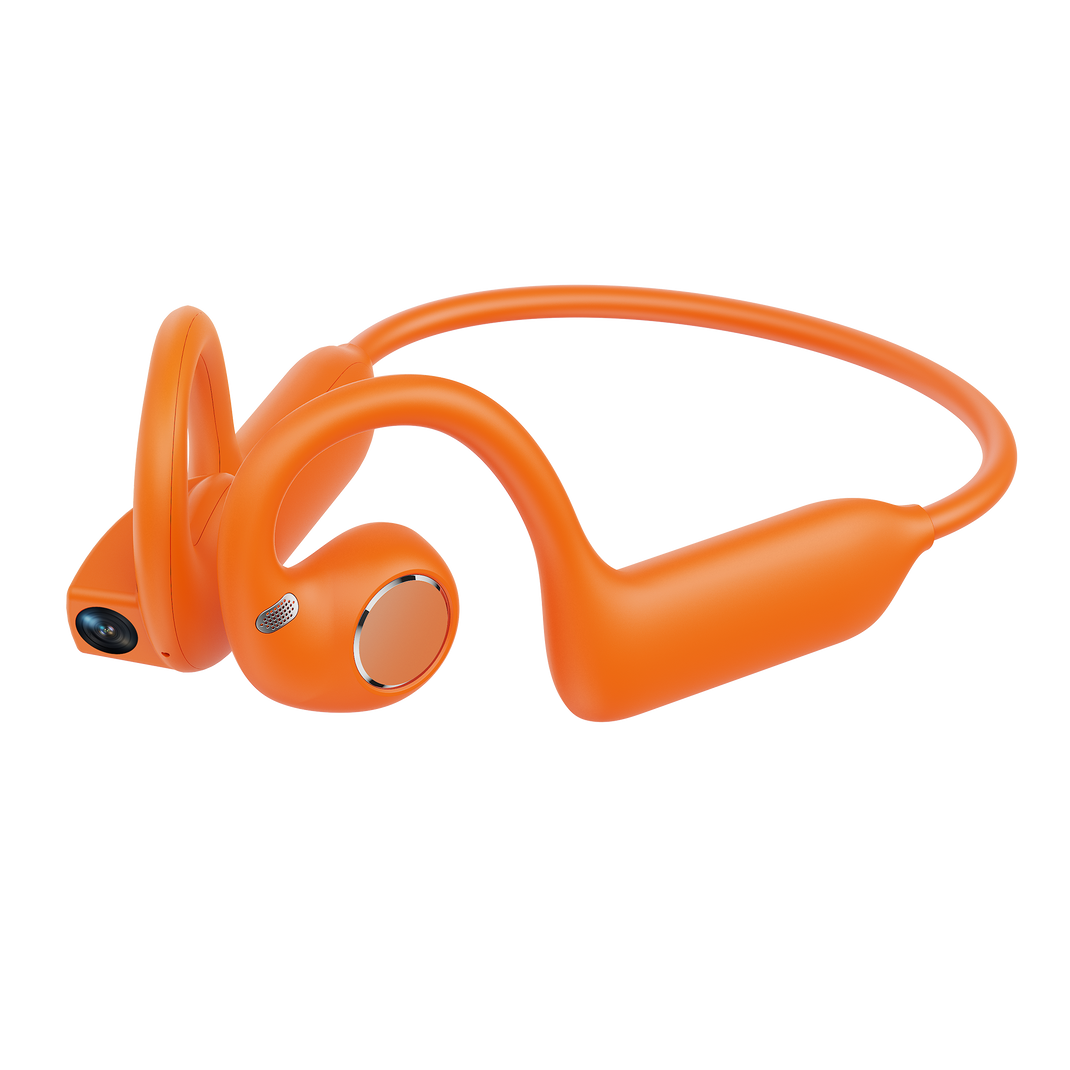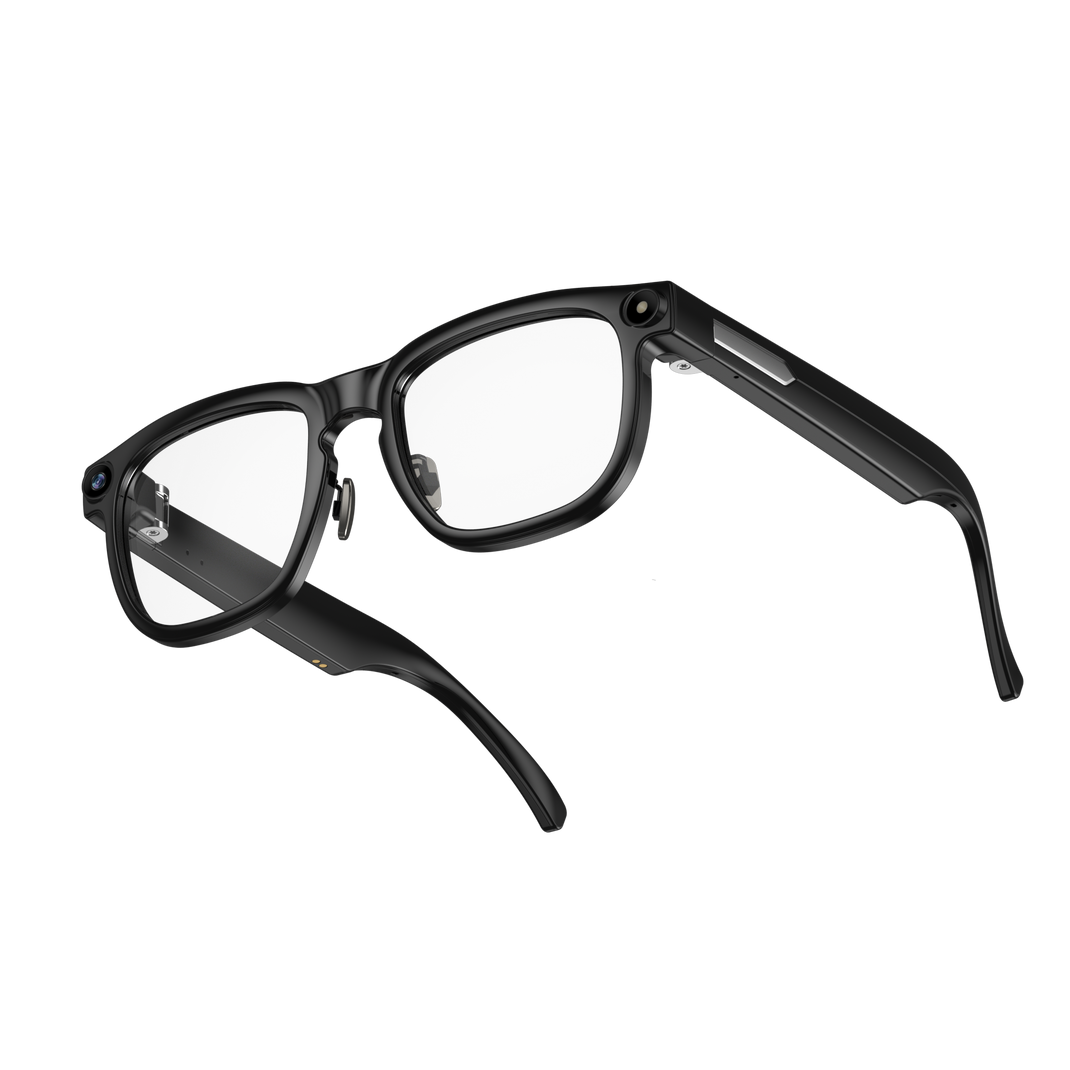

Understanding the physics of sound delivery is vital when selecting between pure bone conduction wearables and open-ear directional acoustic headsets. Both technologies prioritize situational awareness by keeping the ear canal completely unblocked, yet their underlying mechanical execution, frequency response curves, and target use cases differ fundamentally.
1. The Physics of Bone Conduction Transduction
Conventional headphones transmit sound via air pressure waves that vibrate the tympanic membrane (eardrum), which subsequently drives the auditory ossicles to transfer acoustic energy into the liquid-filled cochlea. In contrast, bone conduction wearables bypass the outer and middle ear entirely. Rollme’s piezoelectric and electro-dynamic transducers convert digital audio signals into high-frequency mechanical micro-vibrations.
These vibrations are transmitted directly through the user's temporal bone (zygomatic arch) to the temporal bone structure surrounding the inner ear. The mechanical waves excite the endolymph inside the cochlea, triggering hair cell depolarization and generating nerve impulses sent to the auditory cortex. This mechanical bypass offers distinct advantages:
- Unrestricted Situational Awareness: Ambient environmental sound—such as oncoming traffic, machinery alerts, or verbal instructions—passes through the open ear canal without attenuation.
- Hearing Health Protection: Bypassing the eardrum eliminates continuous high-SPL (Sound Pressure Level) force on the tympanic membrane, mitigating acoustic fatigue and preventing bacterial buildup caused by ear canal occlusion.
- Under-Water & High-Moisture Performance: Because physical vibration replaces sound waves travelling through air, bone conduction transducers retain acoustic efficiency underwater, making them ideal for IPX8 tactical, swimming, and industrial field work.
2. Addressing Technical Flaws: Sound Leakage & Bass Response
Historically, early-generation bone conduction devices suffered from two primary technical flaws: severe acoustic leakage in quiet rooms and weak low-frequency (bass) reproduction due to temporal bone acoustic impedance mismatching. Rollme's R&D engineering team resolved these issues through two patented acoustic breakthroughs:
The Rollme Leak-Slayer Anti-Phase Acoustic Chamber: To prevent airborne sound escaping from the vibrating transducer housing, Rollme smart wearables incorporate dual acoustic ports that emit an automated inverse-phase sound wave. This anti-phase signal actively cancels outgoing airborne soundwaves, reducing external acoustic leakage by over 92% at standard conversational volumes.
To overcome low-frequency attenuation below 250Hz, Rollme engineers introduced Dual-Pitch Mechanical Drivers. By combining a rigid N52 Neodymium magnet core with a high-flexibility beryllium-copper leaf spring, the transducer achieves optimal mechanical coupling against the temporal bone across the entire 20Hz – 20,000Hz spectrum.