 Rollme Rollme
Direct from senior precision manufacturing hubs: customizable smartwatches, AI earbuds, and smart health rings engineered for global markets.
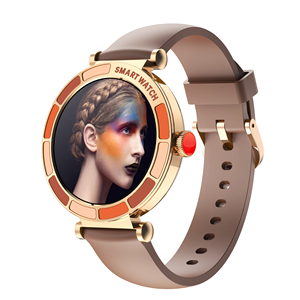
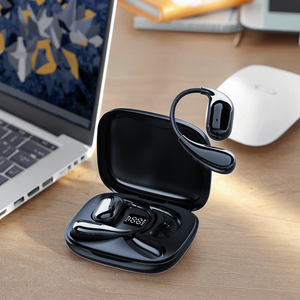
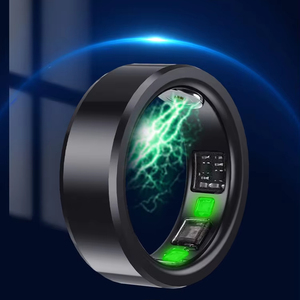
The global wearable technology ecosystem has undergone a fundamental paradigm shift. What once centered on basic step-counting pedometers and simple notification mirrors has rapidly transitioned into medical-grade biosensing platforms, dual-band satellite positioning micro-computers, and generative AI-assisted contextual hardware. As international distributors, enterprise brands, and government procurement teams evaluate manufacturing partners, China’s Pearl River Delta—specifically the Shenzhen-Dongguan manufacturing corridor—remains the indisputable powerhouse of smart wearable research, development, and high-volume production.
However, navigating the landscape of senior China smartwatch manufacturers requires an empirical, data-driven approach. Procurement executives must look past superficial assembly capabilities and rigorously assess a factory’s core R&D infrastructure, patent portfolio, firmware customizability, supply chain integration, and adherence to international medical and radio standards.
Information Gain Insight: Selecting a top-tier Chinese OEM/ODM partner is no longer just about per-unit BOM (Bill of Materials) cost. It is determined by sensor algorithm ownership, antenna efficiency in multi-GNSS environments, power optimization efficiency under 24/7 continuous PPG sampling, and full SDK/API accessibility for proprietary app ecosystems.
When auditing top China smartwatch manufacturers and OEM partners, senior procurement directors must benchmark suppliers against five critical operational standards:
End-to-end precision manufacturing capabilities that bridge concept prototyping to global market distribution.
Engineered with over 10 utility core technology patents and 50+ aesthetic design patents, ensuring complete IP compliance for global distribution and retail launch.
Backing consumer health with dual China Medical Device certifications. Multi-wavelength optical sensors monitor pulse wave transit time, ECG waveforms, and arterial oxygen saturation.
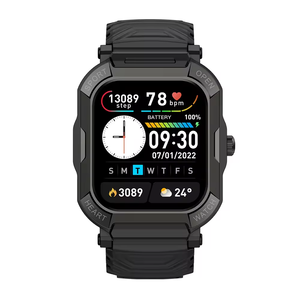
Pioneering standalone outdoor GPS smartwatches featuring dual-band multi-GNSS tracking, built-in vector offline topography maps, altimeter, barometer, and electronic compass.
Direct micro-firmware integration of ChatGPT voice assistants, live neural machine translation engines (144 languages), and automated messaging quick-replies (WhatsApp/Telegram).
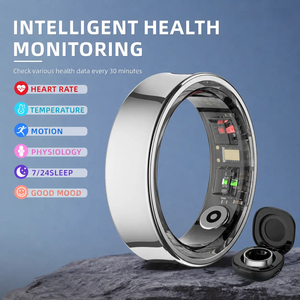
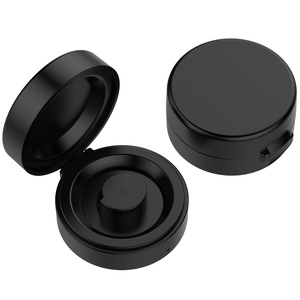
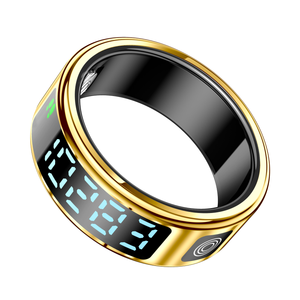
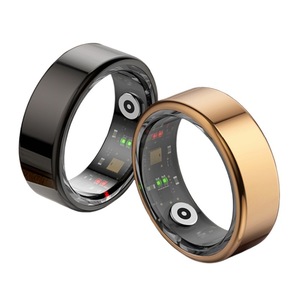
Pioneering screen-free health tracking. Engineering ultra-lightweight medical resin and stainless steel smart rings paired with magnetic charging cradles and 5ATM waterproof sealing.
State-of-the-art high-speed SMT placement lines coupled with 100% automated optical inspection (AOI), battery discharge cycle validation, and salt-spray corrosion chamber testing.
As the smart wearable supply chain matures through 2025 and heading toward 2030, procurement teams must align their product roadmaps with key technological breakthroughs originating from senior Chinese manufacturing labs. Sourcing managers who understand these upcoming technology cycles gain a multi-year lead over competitors.
The consumer demand for non-intrusive, continuous health monitoring has propelled Smart Health Rings from a niche market segment into a mainstream procurement category. Senior Chinese factories have mastered micro-component encapsulation utilizing biocompatible medical resin shells combined with outer 316L stainless steel or titanium alloy frames. Key architectural innovations include:
Outdoor enthusiast, military-grade tactical, and extreme sports smartwatch sectors require hardware that functions seamlessly without smartphone connectivity. China’s top smartwatch manufacturers are establishing new industry standards through the implementation of dual-frequency GNSS receivers (L1 + L5 frequency bands). This setup drastically mitigates multi-path signal interference in dense forests or steep canyon environments.
Furthermore, hardware platforms are now equipped with onboard NAND storage (2GB to 32GB) dedicated to rendering vector topological maps offline, coupled with integrated MEMS altimeter/barometer sensors and 3-axis digital compasses.
The fusion of artificial intelligence with wearable audio/visual micro-hardware represents the next major growth horizon. Modern manufacturing capabilities now support integrating 8MP to 12MP high-definition camera modules directly into lightweight smart eyewear and open-ear audio wearables without compromising thermal efficiency or battery runtime. Key advances include:
To solve the historical bottleneck of wearable battery life, senior Chinese manufacturers are commercializing hybrid power architectures. By laminating semi-transparent solar cell panels underneath high-luminance AMOLED watch displays, outdoor sports watches can continuous trickle-charge under sunlight, extending field autonomy by up to 30–40%.
Compare hardware specifications, sensor suites, and target market alignments for bulk OEM/ODM ordering.
| Product Category | Core Microcontroller / Chipset | Primary Biosensors & Optics | Water Rating | Battery / Power Standard | Target Buyer / Market Segment |
|---|---|---|---|---|---|
| Outdoor Tactical GPS Watch | Dual-Band Multi-GNSS + High-Performance MCU | Continuous Optical PPG, Altimeter, Barometer, 3D Compass | 5ATM Submerged | 600mAh – 850mAh High Density + Solar Trickle Option | Outdoor Brands, Extreme Sports Distributors, Military/Tactical Retailers |
| Lifestyle AI Smartwatch | BLE 5.3 Dual-Mode + Audio DSP Engine | Heart Rate, SpO2, Sleep Staging, Blood Pressure Trend | 3ATM / IP68 | 280mAh – 400mAh Fast Magnetic Charge | Consumer Electronics Brands, Mobile Accessory Retail Chains |
| Smart Health Ring | Ultra-Low Power Micro-BLE (JL / Nordic) | Reflective Red/Infrared PPG, Skin Temp Resistor | 5ATM IP68 | 15mAh – 25mAh Ring + 500mAh Charging Storage Case | Digital Health Platforms, Wellness Brands, Premium Accessory Buyers |
| AI Camera Eyewear / Earbuds | Dedicated Image Signal Processor (ISP) + Wireless SoC | 8MP – 12MP Sony Sensor, Dual Beamforming Mics | IPX4 / Splash-proof | 290mAh Lightweight Battery + Open-Ear Audio Drivers | Travel Tech Importers, Content Creator Brands, Smart Optics Retailers |
Detailed answers covering OEM/ODM customizations, quality assurance standards, factory compliance, and MOQ requirements.
For standard white-label custom packaging and basic laser logo engraving on existing tooling, MOQs typically start at 500 to 1,000 units per model. For deep OEM customization—including custom color injection molding, bespoke alloy plating, custom printed circuit board layout (PCBA), and custom app/firmware UI flashing—the standard production MOQ ranges from 2,000 to 5,000 units depending on component supplier commitments.
Reliable senior manufacturers utilize a two-stage quality assurance protocol. First, 100% of raw watch cases undergo dry pneumatic pressure decay testing to verify mechanical seal integrity before PCBA installation. Second, post-assembly sample batches undergo wet hydrostatic chamber testing in accordance with ISO 22810 international standards, subjecting devices to 5 bar static pressure for extended durations to ensure true aquatic and swimming capability.
Yes. Tier-1 senior Chinese manufacturers provide comprehensive iOS and Android Software Development Kits (SDKs) and open API documentation. Development teams can re-skin the companion mobile application, implement custom cloud server telemetry endpoints, configure custom Bluetooth broadcast payloads, and tailor the on-watch RTOS user interface to match enterprise brand guidelines.
Leading manufacturing facilities provide complete compliance testing documentation required for North America, Europe, the Middle East, and Asia-Pacific markets. Standard certification packages include CE, FCC, RoHS, REACH, UN38.3 (lithium battery transport safety certification), and MSDS. For medical health series models, factories hold ISO 13485 QMS compliance and domestic Class II medical device registration certificates.
Golden sample development for existing hardware configurations with custom software UI pre-flashed typically requires 7 to 12 working days. Full mass-production lead times average 30 to 45 calendar days following golden sample sign-off and deposit receipt, accounting for component procurement, SMT assembly, automated optical inspection, 48-hour burn-in aging tests, assembly, and final hydrostatic sealing verification.
Connect directly with senior OEM/ODM project engineers and supply chain specialists to receive full hardware specification sheets, factory audit reports, and competitive bulk pricing quotations.