 Rollme Rollme
Precision-engineered smartwatches, smart rings, and optical biometric sensors for international distributors and brand owners.
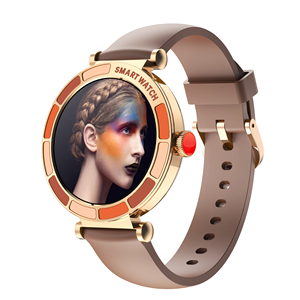
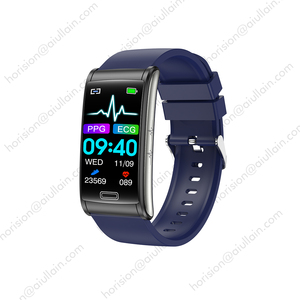
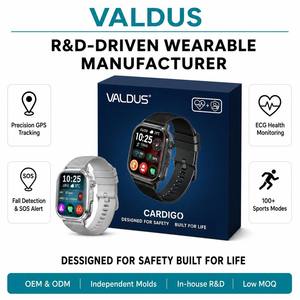
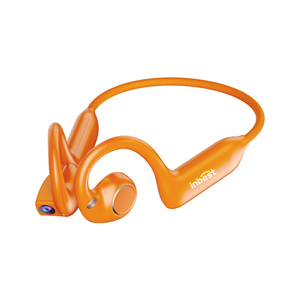
The global wearable health tracker industry is undergoing a structural transition. What began as basic step-counting fitness bands has scaled into a multi-billion-dollar medical-grade health telematics ecosystem. Modern B2B buyers, regional brand distributors, and healthcare tech integrators no longer evaluate manufacturers solely on unit price. Instead, procurement strategies focus on sensor accuracy, algorithm intellectual property, regulatory compliance, and system-level firmware customizations.
To assist corporate buyers in navigating the complex global supply chain, this whitepaper evaluates the core capabilities required of tier-1 manufacturers and exporters. Leading manufacturers distinguish themselves through advanced Surface Mount Technology (SMT) infrastructure, ISO 13485 medical device quality management standards, low signal-to-noise ratio (SNR) optical sensor arrays, and robust over-the-air (OTA) cloud infrastructure.
When selecting a manufacturing partner for wearable health devices—ranging from PPG-based optical heart rate smartwatches to non-invasive glucose monitoring bands and micro-form factor smart rings—buyers must examine four technical pillars:
As consumer demand shifts toward proactive wellness management and remote patient monitoring (RPM), OEM factories are accelerating R&D across several breakthrough hardware vectors:
Integration of single-lead Electrocardiogram (ECG) combined with Pulse Transit Time (PTT) metrics enables real-time cardiovascular risk assessment and trend monitoring without traditional inflatable cuffs.
Multi-spectral optical reflection sensing calibrated via machine-learning models provides non-invasive glycemic trends, offering a major feature differentiator for retail fitness brands.
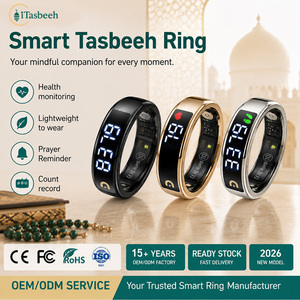
Miniaturization of circuit boards, flexible batteries, and 3D resin encapsulation has allowed health tracking to move into screen-free smart rings with minimal power consumption and extended battery life.
For rugged outdoor tactical wearables, sub-meter positioning accuracy via L1+L5 dual-frequency satellite tracking and offline raster maps represent the current standard for safety-first designs.
Embedding lightweight Large Language Models (LLMs) and context-aware AI assistants directly onto wristwear enables intelligent message quick-replies, dynamic watch face generation, and real-time voice translation.
Merging open-ear bone conduction audio with high-definition optical sensors (e.g., 8MP–12MP micro camera modules) creates smart glass hardware capable of visual AI object recognition and real-time translation.
To assist procurement managers in constructing balanced product portfolios, the following comparative table outlines core technical specifications across major wearable hardware categories:
| Category | Core Health Sensors | Primary Target Audience | Typical Water Rating | Avg. Battery Endurance | Key Sourcing Factor |
|---|---|---|---|---|---|
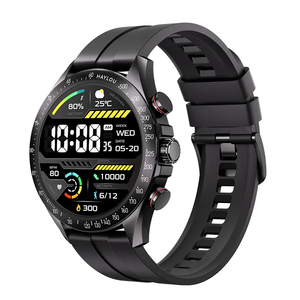
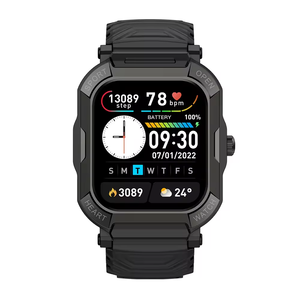
| Tactical Outdoor Smartwatch | Dual-Band GNSS, Altimeter, Barometer, PPG HR/SpO2 | Hikers, Adventurers, Field Personnel | 5ATM / IP68 | 15 – 30 Days | Offline Map Storage & Shockproof Casing |
| Medical-Grade Health Watch | Single-lead ECG, Optical Blood Pressure, SpO2, Temperature | Seniors, RPM Patients, Health Conscious Consumers | 3ATM / IP67 | 5 – 10 Days | NMPA / CE Medical Certification & Sensor Calibration |
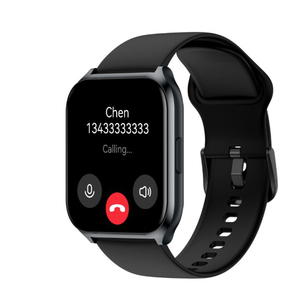
| AI Assistant Lifestyle Smartwatch | PPG Heart Rate, Sleep Tracking, Step Counter | Urban Professionals, Tech Enthusiasts | 3ATM | 5 – 7 Days | Display Resolution (AMOLED) & App Ecosystem |
| Smart Health Ring | 3D Accelerometer, Optical PPG, Skin Temperature Sensor | Minimalist Users, Sleep Tracking Focus | 5ATM / 100m Waterproof | 4 – 7 Days | Size Spectrum (Sizing Kit) & Charging Case Logistics |
| AI Camera Smart Glasses | Micro Camera Module, Open-Ear Audio, Microphone Array | Content Creators, Field Technicians, Travelers | IP54 Splashproof | 1 – 2 Days (Active Usage) | Optical Lens Versatility & Heat Dissipation Design |
As a leading R&D-driven manufacturer and exporter, our enterprise infrastructure operates at the intersection of consumer electronics precision and medical-grade device manufacturing. With a patent portfolio exceeding 10 technological innovation patents and 50 industrial design patents, our organization delivers fully integrated supply chain solutions tailored for international brands, telecom carriers, and regional distributors.
Our manufacturing complex houses automated High-Speed SMT production lines, dust-free optical assembly cleanrooms, and automated testing rigs. From initial Industrial Design (ID) render and Mechanical Design (MD) to PCB layout, custom firmware development, and final packaging, our turn-key service minimizes lead times while safeguarding client intellectual property.
Quality assurance is embedded at every manufacturing node. Every unit undergoes automated optical inspection (AOI), battery cycle testing, thermal stress simulation, and 100% pressure-chamber liquid immersion testing to ensure strict compliance with global import regulations:
With established distribution channels across North America, Europe, the Middle East, and Southeast Asia, our exporting department handles complex international commerce operations. We support flexible trade terms (FOB, CIF, DDP) and maintain dedicated engineering teams to support client-side app SDK integrations and localized cloud deployment.
For standard inventory with customized logo laser engraving or customized packaging, MOQs start as low as 200 to 500 units. For full ODM projects requiring custom tooling mold creation, unique PCB layout design, and bespoke software UI customization, standard project MOQs typically start at 2,000 to 5,000 units depending on component specification.
Sensor accuracy is maintained through a combination of hardware design and software algorithm calibration. We use multi-wavelength optical sensors (Green, Red, and Infrared LEDs) paired with high-performance analog front-ends (AFE). On the software layer, our proprietary motion-filtering algorithms isolate biological signals from movement noise, validated against clinical benchmark devices during R&D testing.
Yes. We provide complete Native iOS and Android SDKs, Bluetooth Low Energy (BLE) protocol documentation, and cloud API integrations. This allows seamless synchronization of biometric telemetry (heart rate, SpO2, sleep telemetry, step data) into custom enterprise software, hospital EHR platforms, or third-party fitness applications such as Apple Health and Google Fit.
All exported models come with standard CE, FCC, and RoHS certifications. Medical-line products are produced under ISO 13485 guidelines and hold China NMPA medical device registrations. MSDS, UN38.3, and Air/Sea transport safety test reports are provided with every shipment to ensure straightforward customs clearance.
We provide a standard 12-month quality warranty for all hardware products. For enterprise partners and distributor orders, we offer spare unit allocations (RMA ratio) or direct component replacement support, backed by remote technical engineering support for software updates.
Partner with an industry-certified OEM/ODM manufacturer. Request catalog pricing, product samples, or schedule a technical consultation with our engineering team today.
Inquire Now