 Rollme Rollme
High-yield bulk production models ready for global OEM/ODM customization, private labeling, and turnkey distribution.
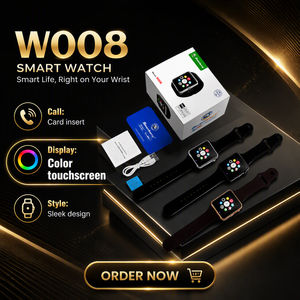
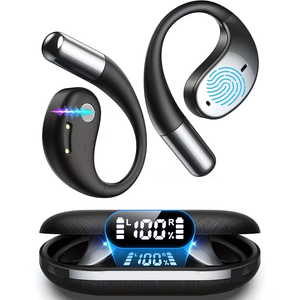
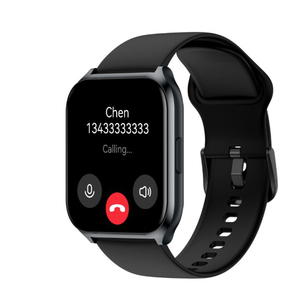
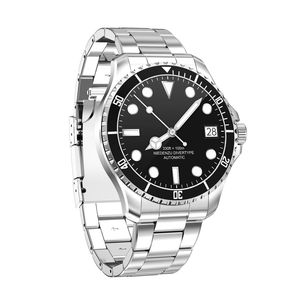
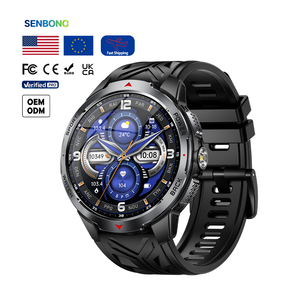
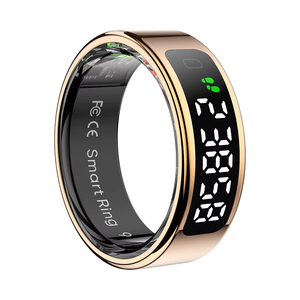
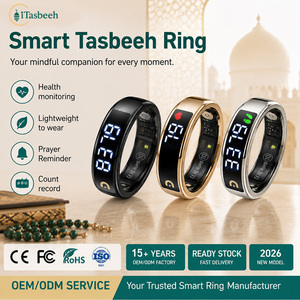
The consumer electronics procurement landscape has undergone a seismic shift. Modern B2B buyers—ranging from regional retail chains, consumer tech brand license holders, to enterprise telecommunication distributors—no longer evaluate bulk smartwatch manufacturers strictly on unit FOB pricing. Instead, global purchasing decisions are dominated by Information Gain criteria: verifying real chipset architectures, evaluating SDK/API flexibility for companion applications, testing biometric algorithm accuracy, and auditing raw factory yield rates.
China’s Pearl River Delta (specifically the Shenzhen-Dongguan manufacturing corridor) accounts for over 82% of global smart wearable shipments. Within this supply chain hub, smart wearable factories fall into three distinct operational tiers:
Full-stack R&D institutions operating high-speed Surface Mount Technology (SMT) lines, cleanroom optical bonding suites, and in-house firmware engineering teams. Tier 1 factories hold proprietary patents, custom BIOS solutions, and medical-grade certifications (such as ISO13485).
Contract manufacturers focusing on standard open-market turnkey PCBAs (Realtek, JL, or Nordic microcontrollers). They assemble pre-molded zinc alloy or plastic watch cases with acceptable quality controls but limited firmware modification capabilities.
Intermediary export entities purchasing surplus unbranded stock for open distribution. While offering low minimum order quantities (MOQs), they lack quality control oversight, engineering support, and long-term component lifecycle guarantees.
Sourcing managers must apply rigorous operational benchmarks to prevent high return rates (RMA), firmware bricking, and battery compliance failures.
| Audit Parameter | Standard Specs (Basic OEM) | Enterprise Leader Benchmark (Rollme Level) | Procurement Impact |
|---|---|---|---|
| Positioning Tech | Single-frequency L1 GPS / Cell-tower AGPS | Dual-Band L1+L5 Multi-GNSS + Offline Vector Maps | Critical for outdoor, military, and off-grid tracking devices. |
| Biosensing Array | Single-LED optical PPG sensor | Multi-channel VCSEL PPG + ECG + Non-invasive trend monitoring | Determines accuracy in heart rate, SpO2, and blood pressure. |
| Water Sealing | IP67 / IP68 basic static liquid dip | 5ATM (50m dynamic pressure) + ISO22810 certification | Eliminates consumer return rates due to swimming/water ingress. |
| Display Technology | TFT LCD / Low-brightness IPS | 2.13" Ultra-bright AMOLED / Always-On Display (AOD) | Directly impacts user retention and premium market pricing. |
| IP & Patent Portfolio | Zero proprietary designs (Public Molds) | 10+ Tech Patents / 50+ Utility & Industrial Design Patents | Protects international brands from customs seizures & infringement. |
Integrating proprietary hardware patents, medical-grade sensor calibration, and cross-category form factors into a unified OEM/ODM production line.
Flagship rugged models like the Rollme Hero D6 and Hero D5 feature standalone offline vector map engines. Users can download regional topographic maps directly onto watch flash memory, navigating dense forests and mountain routes via dual-band GNSS without relying on cellular towers or smartphone Bluetooth bridges.
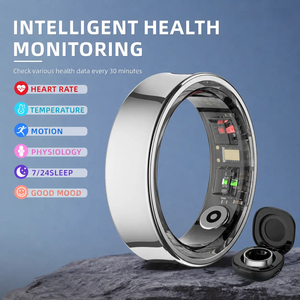
With 2 China medical certifications, Rollme hardware incorporates continuous optical heart rate monitoring, SpO2 pulse oximetry, blood pressure trend analysis, and HRV stress tracking. Wearables like the Rollme R1 Pro Smart Ring provide 24/7 sub-dermal biosensing in a sleek, screen-free titanium chassis.
Pioneering smart wristwear intelligence, the Rollme AI Watch 2 and AI Watch 3 combine onboard neural processing with cloud LLMs (including ChatGPT engine integration). Wearers can execute natural-language queries, generate watch faces, and send quick AI-crafted replies on WhatsApp and Telegram directly from the wrist display.
Anticipate technological inflection points to ensure your brand's bulk orders remain competitive, compliant, and differentiated over multi-year product lifecycles.
The industry is transitioning from simple motion tracking to clinical-grade preventive wellness. Overseas buyers should prioritize factories equipped to integrate photoplethysmography (PPG) sensors calibrated for non-invasive glucose trend awareness, arterial stiffness monitoring, and electrocardiogram (ECG) recording.
Smartwear is expanding beyond the wrist. Innovations like the Rollme ProView (Sony 12MP AI camera glasses) and Rollme AirCam (open-ear audio with 1080P EIS camera) represent the fastest-growing OEM category—combining real-time AI visual recognition, voice translation, and directional open-ear audio.
Consumer demand for outdoor tactical watches requires strict adherence to MIL-STD-810H environmental testing. Advanced exporters now employ high-density silicon-anode lithium polymer cells (up to 850mAh in models like the Hero D6), yielding up to 20 days of operational endurance under continuous GPS tracking.
Essential legal, technical, and operational answers for supply chain managers, brand owners, and electronics importers.
Partner directly with an R&D-driven manufacturer. Obtain factory-direct FOB quotes, engineering documentation, samples, and OEM custom firmware support today.