 Rollme Rollme
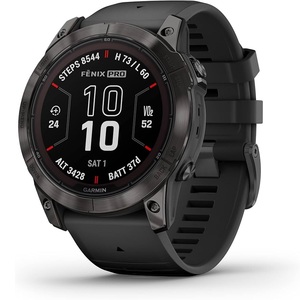
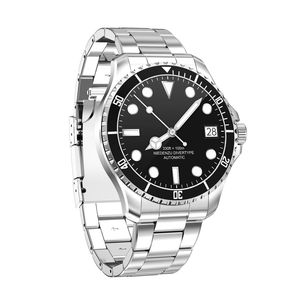
Explore our core manufacturing portfolio spanning military-grade GPS tactical watches, micro-biometric health rings, and integrated communications hardware available for private label procurement.
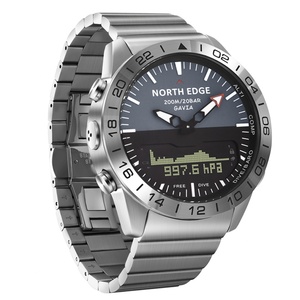
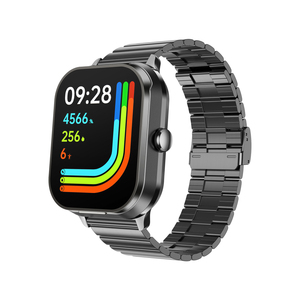
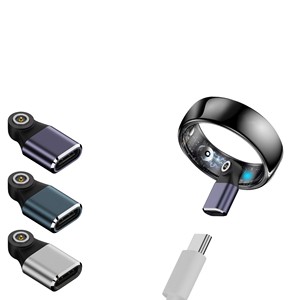
Empowering global B2B distributors, military equipment suppliers, and consumer electronics brands with end-to-end ODM/OEM tactical wearable engineering.
As a leading custom OEM tactical smartwatch exporter, our R&D hub operates at the intersection of ruggedized mechanical design, low-power embedded software, and high-precision biometric sensing. Unlike conventional white-label assemblers, our facility integrates fully automated SMT line assembly, environmental chamber testing (MIL-STD-810H standards), and custom firmware stack development under rigorous ISO 9001 and ISO 13485 quality management frameworks.
Our engineering portfolio holds over 10 core invention patents and 50 industrial design patents, establishing a defensible technological foundation for enterprise partners. From off-grid dual-frequency L1+L5 GNSS multi-satellite navigation algorithms to medical-grade photoplethysmography (PPG) array tuning, our solutions deliver verifiable data accuracy under extreme operational environments (-40°C to +70°C, high vibration, and sub-surface hydrostatic pressure).
By standardizing on modular hardware architecture, we allow B2B clients to tailor screen technologies (AMOLED vs. Sunlight-Readable Memory-in-Pixel), casing materials (Aerospace Titanium Alloys, Reinforced Polycarbonate, 316L Stainless Steel), and embedded sensor arrays (ECG, SpO2, Altimeter/Barometer, PPG) with rapid time-to-market and minimized NRE (Non-Recurring Engineering) expenses.
Engineered for MIL-STD-810H compliance. Featuring double-injection molded TPU frames, sapphire crystal lens caps, and custom silicone gaskets achieving certified 5ATM/10ATM water resistance.
Integrated dual-band (L1/L5) GPS, GLONASS, Galileo, and BeiDou modules paired with ultra-low-power flash memory for offline topological map rendering without cellular connectivity.
Multi-wavelength optical sensor arrays optimized with machine-learning PPG algorithms for accurate continuous heart rate, VO2 max, SpO2, and non-invasive health parameter tracking.
An authoritative analysis of hardware architectural shifts, low-power display technology, and edge computing trends defining the next decade of professional wearables.
The global tactical wearable market is undergoing a structural transition from basic fitness loggers to deployment-grade field units. Driven by defense, emergency response, and commercial adventure sectors, custom OEM tactical smartwatch exporters must address critical technological imperatives across three core architectural layers:
1. Dual-Band Satellite Navigation & Inertial Dead Reckoning (DR): Traditional single-frequency GNSS receivers suffer from multipath interference in steep canyons, urban jungles, and dense forest canopies. Modern OEM designs integrate dual-band L1+L5 multi-constellation processors. Combined with 9-axis inertial measurement units (IMU—3-axis accelerometer, 3-axis gyroscope, 3-axis magnetometer), modern tactical watches run dead-reckoning algorithms to preserve location accuracy when satellite signals are jammed or obscured.
2. Ultra-Low Power Display Technology: The power budget of a tactical watch dictates its operational reliability. High-brightness AMOLED screens (reaching up to 1,000 nits for daylight readability) are combined with advanced ambient light sensing and micro-second sleep states. Alternatively, Memory-in-Pixel (MIP) reflective displays remain the gold standard for continuous outdoor operations, consuming zero energy for static image holding under direct sunlight.
3. Tactical Connectivity & Direct Satellite IoT Integration: The convergence of Bluetooth Low Energy (BLE 5.3), Near Field Communication (NFC), and standalone cellular (4G-LTE / NB-IoT) allows modern wearables to act as body-area network (BAN) nodes. Looking ahead, non-terrestrial network (NTN) satellite messaging integration allows emergency SOS alerts and coordinates to transmit directly to low-earth orbit (LEO) constellations without cell towers.
Strategic intelligence for brand owners, purchasing directors, and government contractors preparing their product pipelines.
Sourcing tactical smartwatches in the upcoming decade requires supply chain leaders to move beyond cost-per-unit metrics and focus on structural adaptability, software ecosystem ownership, and regulatory compliance. Key shifts shaping B2B procurement include:
A. Transition to Open SDK and Custom API Ecosystems: Global buyers increasingly demand full access to Wearable Software Development Kits (SDKs) and raw sensor data streams (PPG green/red light readings, 3D accelerometer data). Custom app development enables enterprise buyers to integrate wrist-worn devices into proprietary command-and-control software, remote patient monitoring (RPM) platforms, or specialized corporate wellness networks.
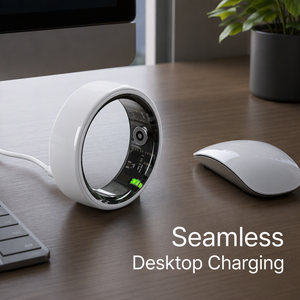
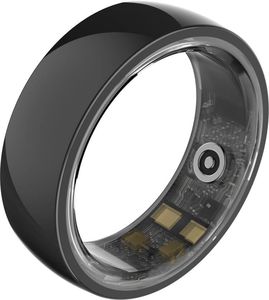
B. Cross-Category Ecosystem Bundling: Consumer and enterprise users no longer view smartwatches in isolation. Strategic importers are curating multi-device health ecosystems. For instance, pairing a rugged tactical GPS smartwatch for outdoor deployment with a sleek Smart Health Ring for nocturnal sleep tracking and continuous recovery monitoring allows brands to capture higher customer lifetime value (LTV).
C. Rigorous Data Security & Server Localization: Data sovereignty laws (GDPR, HIPAA, CCPA) necessitate strict data transport protocols. OEM exporters must provide custom server endpoint configuration, allowing enterprise buyers to route encrypted user data directly to their localized private cloud infrastructure without traversing third-party middleware servers.
Comparative engineering parameters across key OEM wearable platforms available for mass production customization.
| Hardware Category | Display Tech | GNSS / Navigation | Sensors & Biometrics | Battery / Power | Ingress Rating |
|---|---|---|---|---|---|
| Rugged Tactical Flagship | 2.13" AMOLED (1000 nits) | Dual-band L1+L5 / Offline Map | PPG, SpO2, Altimeter, Barometer | 850mAh (Up to 30 Days) | 5ATM / MIL-STD-810H |
| Lightweight Sport GPS | 1.32" AMOLED / MIP | Dual-band 6-Satellite | Optical HR, VO2 Max, Compass | 450mAh (14 Days) | 5ATM Waterproof |
| Standalone 4G Comms | 2.01" TFT Full Touch | Single GPS / Cellular LBS | PPG Heart Rate, Sleep Tracking | 700mAh (Standalone Call) | IP67 Water Ingress |
| Micro Health Ring | Screenless / App Interface | Phone-linked GPS | Medical ECG, SpO2, Temperature | 20mAh (5-7 Days Wear) | 5ATM (Diving Safe) |
How our manufacturing facilities manage risk, guarantee yield rates, and maintain quality from prototype to mass production.
Verification of PCB layout, antenna tuning (OTA passive/active efficiency), signal integrity, and custom tooling housing fitment prior to tooling sign-off.
Stress testing including drop tests (1.5 meters), high-pressure waterproof testing chamber cycles, thermal shock exposure (-40°C to +80°C), and salt fog corrosion trials.
Production Line Validation (PVT) ensures line yield reaches >98.5%. Final mass assembly includes 100% automated optical inspection (AOI) and pneumatic sealing tests.
Answers to common commercial, engineering, and logistics questions from international buyers and OEM partners.
Ready to launch your brand's next tactical wearable product line? Speak directly with our senior OEM project managers and hardware engineering leads today.
Contact Us