 Rollme Rollme
Turnkey smartwatches, health rings, and AI voice/audio wearables configured for international B2B deployment and white-label branding.
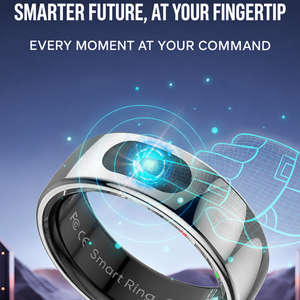
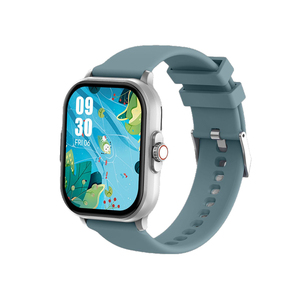
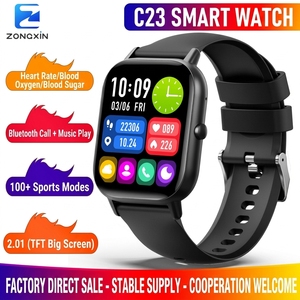
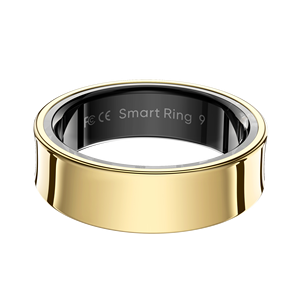
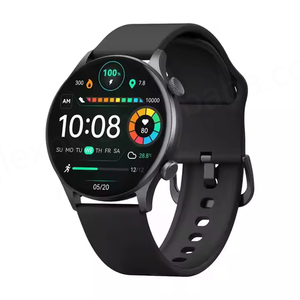
As the global wearable hardware market matures beyond basic step-counting into complex medical-grade diagnostic monitoring and edge artificial intelligence, selecting a qualified Custom OEM Smartwatch Manufacturer and Exporter is the single most critical strategic decision for hardware brands, telecom operators, and healthcare providers. Original Equipment Manufacturing (OEM) and Original Design Manufacturing (ODM) in the smart wearable domain require a multi-disciplinary synthesis of micro-electronics engineering, optical sensor calibration, biocompatible materials science, and embedded software architecture.
Our manufacturing footprint encompasses over 25,000 square meters of class-10,000 dust-free Surface Mount Technology (SMT) cleanrooms, automated optical inspection (AOI) lines, and high-precision CNC chassis machining units. Supported by an in-house R&D team consisting of over 80 hardware engineers, embedded firmware developers, and industrial designers, we maintain an intellectual property portfolio of more than 10 core invention patents and 50 industrial design patents. This foundational technology engine guarantees that our OEM brand partners acquire proprietary technological moats rather than off-the-shelf white-label commodities.
Information Gain Strategic Insight: Enterprise buyers must evaluate OEM partners not merely by unit BOM (Bill of Materials) cost, but by firmware stability, sensor cross-calibration accuracy, and long-term SDK maintenance capability. A low-cost micro-controller unit (MCU) paired with uncalibrated PPG algorithms results in catastrophic field return rates exceeding 8.5%.
From schematic capture and 8-layer HDI PCB layout to antenna simulation (LDS/FPC GNSS & BLE), we optimize signal-to-noise ratios (SNR) within ultra-compact form factors.
Operated under strict quality management systems certified for medical devices. Every batch undergoes AQL 0.65 Level II inspections and 100% full-load burn-in testing.
In-house developed biosensing algorithms for non-invasive blood glucose trend modeling, multi-lead ECG waveform smoothing, and multi-GNSS anti-multipath tracking.
The consumer and enterprise wearable landscape is experiencing a paradigm shift driven by miniaturization, optical spectroscopy, and edge compute micro-models. OEM procurement teams must align their multi-year product roadmaps with four macro-technological trajectories:
Traditional single-wavelength photoplethysmography (PPG) is giving way to multi-spectral optical arrays utilizing green (525nm), red (660nm), infrared (940nm), and short-wave infrared (SWIR) LEDs. By measuring differential light absorption across blood volume pulses, modern OEM platforms enable non-invasive blood glucose trend tracking, continuous arterial stiffness measurement, and real-time blood pressure estimation via pulse transit time (PTT) algorithms—without requiring inflatable cuffs.
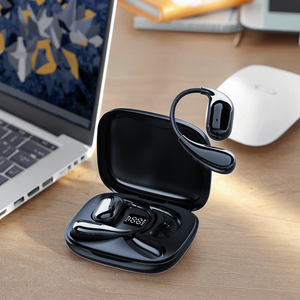
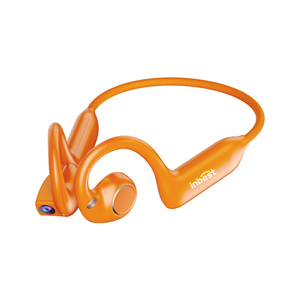
Next-generation smartwatches and audio-visual wearables (such as AI translation earbuds and camera-integrated smart glasses) incorporate ultra-low-power Neural Processing Units (NPUs) directly into the silicon layout (e.g., Ambiq Apollo4, Nordic nRF54 series). This allows local wake-word processing, offline voice synthesis, real-time noise cancellation (ENC), and instant multi-language translation without relying on continuous cloud latency.
Outdoor tactical smartwatches are abandoning legacy single-frequency GPS in favor of dual-band (L1+L5) positioning engines supporting six satellite constellations (GPS, GLONASS, Galileo, BeiDou, QZSS, NavIC). Paired with low-power vector rendering engines, hardware platforms can now store offline vector maps on internal eMMC/NAND flash (up to 32GB), providing precision off-grid breadcrumb navigation for military and extreme outdoor users.
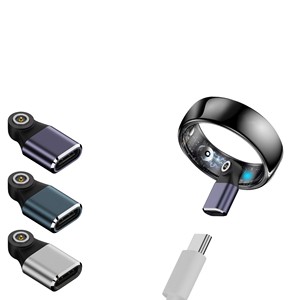
Micro-encapsulation techniques have enabled smart rings (such as the R08 and Titanium Series) to achieve 5ATM waterproof capabilities in ultra-lightweight 4-gram shells. By integrating flexible PCB circuit boards, 3D optical light guides, and high-energy-density solid-state lithium polymer chemistry, smart rings are capturing significant market share from traditional bands due to superior sleep compliance and non-intrusive 24/7 biometric tracking.
For international buyers, brand owners, and cross-border e-commerce importers, navigating the supply chain for smart wearables demands rigorous risk management and strategic foresight. Based on market intelligence across 100+ export destinations, three core procurement trends have emerged:
1. Modular SDK & API White-Labeling: Modern enterprise buyers no longer accept locked, closed-loop companion applications. Sourcing directors demand open Android and iOS software development kits (SDKs), Bluetooth low energy (BLE) API documentation, and cloud webhook endpoints. This enables OEM clients to seamlessly plug wearable health telemetry directly into their enterprise health CRM, insurance portal, or corporate wellness ecosystem.
2. Biocompatibility & Material Compliance Rigor: Regulatory scrutinies in North America (FDA, FCC) and Europe (CE, RoHS, REACH, MDR) have heightened. Exported wearables must feature hypoallergenic materials—including surgical 316L stainless steel, Grade 5 Titanium alloys, and medical-grade fluororubber or liquid silicone straps certified under ISO10993 standards to prevent contact dermatitis during prolonged wear.
3. Agility in Dynamic Tooling & CMF Options: Color, Material, and Finish (CMF) customization is essential to differentiate products on retail shelves. Tier-1 OEM exporters provide rapid prototype 3D sample printing within 72 hours and custom aluminum injection tooling within 21 days, supporting PVD vacuum plating, DLC (Diamond-Like Carbon) coatings, and laser-engraved branding.
Direct answers to technical, operational, and commercial queries evaluated by global supply chain managers.
Partner with a trusted, patent-backed OEM/ODM manufacturer. Request engineering datasheets, customized RFQ pricing, or schedule a virtual technical consultation with our engineering team today.
Send an Inquiry