1. Executive Industry Overview: Sourcing AR Smart Glasses & Wearables from China
The global Augmented Reality (AR) wearable hardware market has undergone a paradigm shift, evolving from heavy industrial head-mounted displays (HMDs) to lightweight, everyday smart frames. As enterprise buyers, global distributors, and technology brands search for reliable China wholesale AR smart glasses factories, understanding the underlying supply chain architecture in China's manufacturing hubs (primarily Shenzhen, Dongguan, and Huizhou) becomes vital for procuring high-margin, reliable hardware.
China's AR smart glasses manufacturing ecosystem controls over 85% of global optoelectronic assembly, micro-display packaging, and advanced SMT (Surface Mount Technology) processes. Industrial procurement directors must navigate technical trade-offs between optical engine architectures—such as BirdBath, Freeform, Diffractive Optical Waveguides, and Refractive Waveguides—and display technologies including MicroLED, MicroOLED, and LCoS (Liquid Crystal on Silicon).
This white paper serves as an authoritative B2B procurement guide for sourcing OEM/ODM AR smart glasses, AI camera glasses, open-ear audio frames, and complementary smart wearable devices directly from certified tier-1 original equipment manufacturers (OEMs).
When placing wholesale ODM orders with Chinese factories, selecting the correct optical system dictates frame weight, power consumption, luminous efficiency, visual clarity, and target retail positioning:
BirdBath Optics + MicroOLED
Provides outstanding contrast ratios, 1080P resolution per eye, and a high Field of View (FOV 45°-50°). Ideal for media consumption, gaming, and virtual screen projection smart glasses.
MicroLED + Monolithic Waveguide
Delivers ultra-high peak brightness (>3,000,000 nits output at display level) enabling outdoor daylight readability in ultra-lightweight form factors under 45 grams.
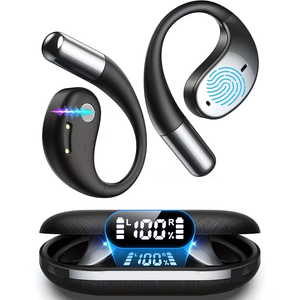
AI Camera + Open-Ear Audio
Combines Sony 12MP/8MP camera sensors with AI multimodal Large Language Models (LLMs) for object recognition, real-time voice translation, and hands-free recording.
3. Factory Selection Criteria & SCM Audit Standards in China
Navigating supplier capabilities requires verifying manufacturing equipment, dust-free cleanroom ratings, and optical calibration automated testing suites. A tier-1 AR smart glasses OEM factory in China must possess the following infrastructure:
Class 1,000 / Class 10,000 Cleanroom Optical Assembly: Dust-free environments are non-negotiable for bonding optical waveguides to micro-displays. A single micro-particle dust spot degrades visual clarity and causes high field failure rates.
Six-Axis Robotic Optical Alignment Testing: High-precision automated alignment rigs ensure MTF (Modular Transfer Function) compliance, eliminating binocular parallax distortion that causes user dizziness.
IP Ratings & Environmental Test Chambers: Comprehensive IP65/IP68 dust and waterproof testing, salt spray corrosion tests, 1.5-meter drop testing, and thermal cycling (-20°C to 65°C).
Partnering with an R&D-driven manufacturer yields immense competitive advantages over standard trading agencies. Our engineered hardware portfolio reflects extensive intellectual property assets, technological innovation, and world-class trade credentials:
10+ Technology Patents
Proprietary micro-circuit design, low-power Bluetooth optimization, heat dissipation architectures, and sensor fusion algorithms.
50+ Industrial Design Patents
Ergonomic, featherlight frames, custom optical bridge housings, and sleek smart ring IP protections.
Medical & Global Certifications
ISO9001 quality management, CE, FCC, RoHS, REACH, and specialized medical device production qualifications.
Having showcased advanced smart wearables, rugged GPS off-grid navigators, and optical frames at major trade shows such as CES Las Vegas, our production lines supply international brand owners, telco operators, and enterprise distributors with scalable OEM/ODM fulfillment.
Procurement directors planning 3-to-5-year product roadmaps must align hardware specifications with fast-emerging consumer and industrial technology shifts:
Multimodal Generative AI Edge Processing: Future AR glasses will transition from pure display accessories to standalone AI nodes equipped with high-efficiency neural processing units (NPUs). Features like instant voice translation (144+ languages), scene interpretation, and automated AI summary note-taking are becoming standard specs.
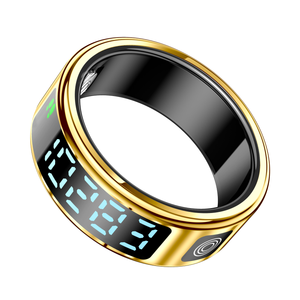
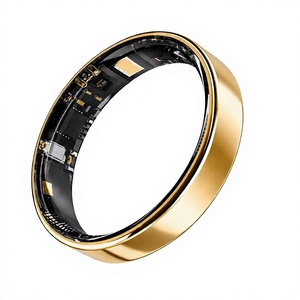
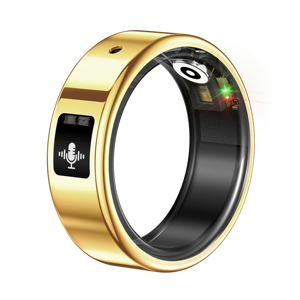
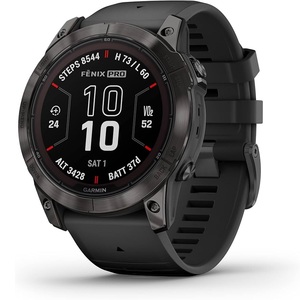
Convergence of Smart Rings, Smartwatches & Glasses: Ecosystem connectivity allows smart rings (e.g. 5ATM/IP68 health trackers with PPG sensors) and outdoor rugged GPS smartwatches to act as subtle gesture controllers or telemetry inputs for AR glasses visual interfaces.
Ultra-Low-Power MicroLED Optical Modules: MicroLED yields are scaling rapidly, reducing B2B module costs by 40% over the next two years. This allows smart glasses to maintain 14-hour active operational battery life under normal HUD usage.
Rx Lens Compatibility & Prescription Customization: Factories with integrated optical lab tooling allow wholesale buyers to offer custom magnetic or drop-in prescription lenses (diopter correction) seamlessly within retail distribution networks.
Understanding price drivers in China wholesale manufacturing enables procurement leads to negotiate optimized BOM (Bill of Materials) costs while ensuring product differentiation:
Customization Tier
Minimum Order Quantity (MOQ)
Typical NRE / Tooling Lead Time
Engineering Scope & Deliverables
Ready-to-Ship White Label
50 - 200 Units
1 - 3 Days
Custom laser logo etching, localized user manual, customized retail box packaging.
Firmware & App Customization
500 - 1,000 Units
2 - 4 Weeks
Custom boot logo, bespoke iOS/Android app branding, custom BLE UUIDs, localized AI model integration.
Detailed technical and business answers to common queries raised by hardware buyers, brand owners, and logistics directors.
Q1: What is the typical Minimum Order Quantity (MOQ) for wholesale AR smart glasses OEM orders?
▼
For standard catalog products (such as white-label AI camera smart glasses or open-ear audio frames), MOQs start as low as 50 to 100 units. For customized branding, custom colors, or modified firmware packaging, the standard MOQ is 500 units. Fully custom ODM projects involving structural mold tooling and optical engine integration require a baseline MOQ of 3,000 units.
Q2: How do Chinese factories handle quality assurance and optical testing for AR glasses?
▼
Leading OEM factories implement a multi-stage Quality Control (QC) framework: Incoming Quality Control (IQC) for raw lenses, chips, and micro-displays; Input Process Quality Control (IPQC) inside Class 1,000 cleanrooms during optical bonding; 100% automated optical alignment testing for distortion and luminance uniformity; and Outgoing Quality Control (OQC) including 48-hour battery burn-in and IP-level water/dust ingress validation.
Q3: Can smart glasses be integrated with existing enterprise software or third-party AI APIs?
▼
Yes. Our engineering team provides custom Android/iOS Software Development Kits (SDKs) and open API hooks. This enables enterprise customers to link the smart glasses' audio, camera, and HUD hardware directly with proprietary cloud platforms, ChatGPT/OpenAI endpoints, translation engines (supporting 144+ languages), or warehouse management software (WMS).
Q4: What certifications are mandatory for importing AR smart glasses into Europe and North America?
▼
For North America, FCC ID (for Bluetooth/Wi-Fi emissions) and FDA registration (if marketed with protective/corrective impact-resistant optical lenses) are required. For the EU, CE-RED (Radio Equipment Directive), RoHS, REACH, and EN62471 (photobiological eye safety for displays/lasers) are required. Batteries must carry UN38.3 and MSDS documentation for air and maritime freight compliance.
Q5: What is the typical lead time from contract signing to factory shipment?
▼
In-stock white-label items ship within 3 to 7 business days. Customized logo and packaging orders take approximately 15 to 20 business days. Comprehensive ODM mass production runs—including SMT manufacturing, optical calibration, and packaging—typically require 45 to 60 days following sample golden sign-off.
Q6: How do thermal management architectures operate in ultra-compact smart glass frames?
▼
Because micro-processors and camera SoCs generate localized heat in narrow eyeglass temples, factory engineers utilize high-thermal-conductivity graphite sheets coupled with lightweight aluminum alloy heat sinks. This passive dissipation structure conducts heat away from the user's face, maintaining temple skin temperatures below 38°C during continuous recording or AI processing.
Partner with China's Premier AR Wearables Manufacturer
Request factory direct price lists, engineering specifications, or order a turnkey evaluation kit today. Our technical sales team responds within 12 business hours.
 Rollme