
Choosing the right ECG Smartwatch in 2026 requires more than comparing screen size, battery claims, or app design. Global buyers need dependable heart readings, clear software, comfortable sensors, and support that continues after purchase. A watch may record a single-lead ECG in seconds, yet its usefulness depends on proper wrist contact, calm conditions, and accurate interpretation.
This guide examines ten leading models for different users and markets. It considers ECG recording quality, heart-rate alerts, sleep tracking, battery endurance, water resistance, app compatibility, and data export options. It also checks regional availability, subscription requirements, warranty coverage, and relevant health-device approvals. These details can matter when a buyer travels, changes phones, or shares records with a clinician.
Real-world testing often reveals small weaknesses. A sensor may struggle during exercise or with loose straps. Some apps feel polished but hide useful data behind subscriptions. No watch replaces professional medical advice. That limitation matters. The rankings therefore focus on practical reliability rather than impressive marketing language. Evidence from manufacturer specifications, independent testing, user experience, and recognized health authorities shapes each evaluation. Readers should still confirm local regulations and clinical support before purchasing. The best choice may not be the most expensive model; it may be the one that records consistently, explains results clearly, and fits daily habits. Yet even this approach has room for debate, because comfort, skin type, phone ecosystem, and regional services can change the experience.
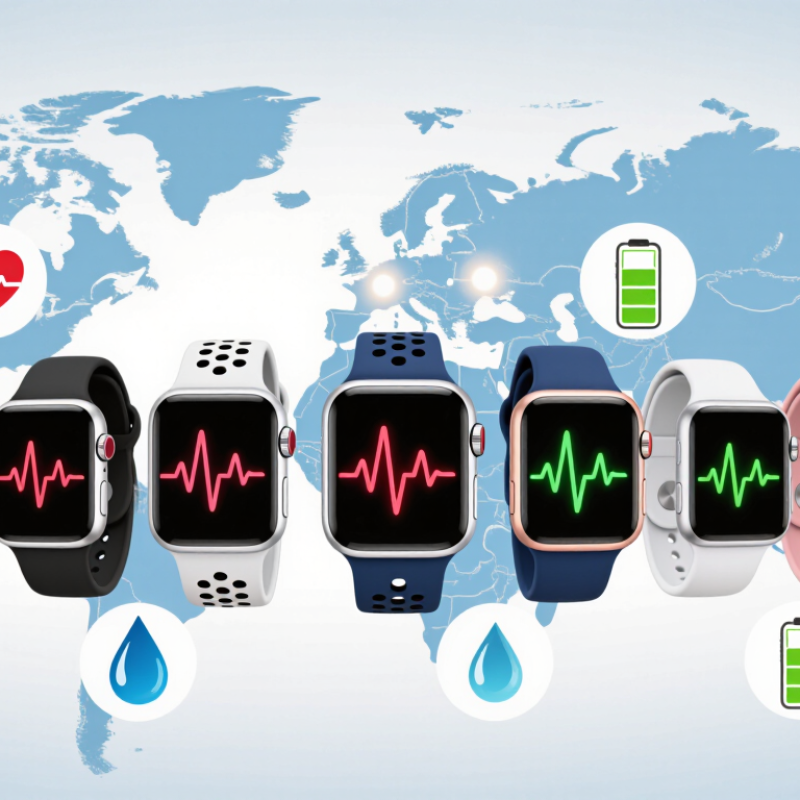
Top 10 ECG Smartwatches for Global Buyers in 2026?
An ECG smartwatch records the heart’s electrical activity through sensors touching the wrist and finger. Most consumer devices capture a single-lead tracing, not a hospital-grade 12-lead ECG. This distinction matters. The reading may flag irregular rhythm patterns, including possible atrial fibrillation, while also showing heart rate and recording time. It does not confirm a heart attack or replace clinical testing.
The need is substantial. The World Health Organization reports that cardiovascular diseases caused about 17.9 million deaths worldwide in 2019. A global analysis published in Circulation estimated 37.6 million people had atrial fibrillation in 2017, with numbers expected to rise. For global buyers, an ECG feature can provide a convenient record during palpitations, dizziness, or unusual fatigue. A saved tracing may help a clinician understand what happened outside the clinic. That practical detail is often more valuable than a bright display.
Accuracy depends on skin contact, movement, sweat, and the user’s rhythm. The signal can look convincing and still be wrong. It can also miss intermittent events. Buyers should check regulatory clearance in their country, data-sharing controls, battery performance, and access to medical review. Professional societies generally treat wearable alerts as screening support, not diagnosis. In my view, the best device is not the one promising certainty. It is the one that produces understandable records and encourages timely care.
Top 10 ECG Smartwatches for Global Buyers in 2026
Key Features to Compare in ECG Smartwatches
ECG smartwatch selection should begin with clinical purpose, not screen size. The World Health Organization reports that cardiovascular diseases cause about 17.9 million deaths yearly. A reliable ECG feature can support rhythm screening, but it cannot replace medical assessment. Check whether the device has clearance from a recognized health authority in your market. Also examine its intended use, supported age range, and detected rhythm types. Some devices identify possible atrial fibrillation, while others only record single-lead waveforms. That difference matters.
Sensor quality deserves hands-on attention. Look for stainless-steel electrodes, stable skin contact, clear recording instructions, and visible signal-quality feedback. A loose strap can create noisy traces during a quiet reading. Battery life, offline recording, exportable PDF reports, and phone compatibility also affect daily use. IDC’s Worldwide Quarterly Wearable Device Tracker estimated approximately 537.6 million wearable devices would ship globally in 2024. Scale is impressive, but popularity is not clinical validation. This is where buyers should remain skeptical.
Tips: Compare ECG recording time, not just marketing claims. Test readings while seated, with dry skin and relaxed fingers. Review privacy controls, data deletion options, and regional cloud storage. Ask whether a clinician can read the exported file. False alerts can cause unnecessary worry; missed signals can create dangerous confidence. I would also check language support and charging behavior before travel. Small details often decide real-world reliability.
| Rank | Anonymized ECG Watch Profile | ECG Configuration | Typical Recording Time | ECG Availability | Irregular-Rhythm Alerts | Battery Range | Water Resistance | Phone Compatibility | Best Buying Scenario |
|---|---|---|---|---|---|---|---|---|---|
| 1 | Profile A — Premium Health Platform | Single-lead ECG; optical heart-rate sensor; accelerometer | About 30 seconds | Country and regulatory approval dependent | Yes; background screening may be available | Approximately 1.5–2 days with regular use | Commonly 5 ATM or equivalent | Usually iOS and Android; feature support may differ | Buyers prioritizing advanced health analysis and app integration |
| 2 | Profile B — Long-Battery Health Watch | Single-lead ECG with optical pulse and blood-oxygen sensors | About 30 seconds | Region-specific; verify local support before purchase | Often available, subject to software and region | Approximately 5–14 days, depending on usage | Typically 5 ATM; swimming suitability varies | Android and selected iOS functions | Travelers and users who dislike frequent charging |
| 3 | Profile C — Fitness-First ECG Watch | Single-lead ECG; continuous optical heart-rate tracking; GPS | About 30 seconds | Available only in supported markets | Yes, when enabled in the companion app | Approximately 4–8 days | Usually 5 ATM or higher | Generally Android and iOS | Runners and active users wanting ECG plus route tracking |
| 4 | Profile D — Android-Centered Smartwatch | Single-lead ECG; optical heart rate; skin-temperature or stress sensors may be included | About 30 seconds | Dependent on country, phone, and account settings | Yes; notification rules vary by software | Approximately 1–3 days | Commonly 5 ATM with additional dust protection | Best with compatible Android phones; iOS support may be limited | Android users seeking apps, calls, and health functions |
| 5 | Profile E — Compact ECG Lifestyle Watch | Single-lead ECG; optical heart rate; sleep tracking | About 30 seconds | May require an approved region and compatible app | Usually available as an optional alert | Approximately 3–7 days | Commonly 3–5 ATM | Android and iOS, with possible feature differences | Users wanting a lighter watch for daily wellness tracking |
| 6 | Profile F — Rugged Outdoor ECG Watch | Single-lead ECG; optical heart rate; GPS; barometric or altitude sensors | About 30 seconds | Regulatory and software availability varies internationally | Yes, where supported | Approximately 5–18 days, depending on GPS use | Often 5 ATM or 10 ATM; check impact and temperature limits | Android and iOS are commonly supported | Hikers and outdoor users needing durability and long endurance |
| 7 | Profile G — Affordable ECG Entry Watch | Single-lead ECG; optical heart-rate sensor; basic activity tracking | About 30 seconds | Must be confirmed for the buyer’s country | May be unavailable or limited to manual checks | Approximately 3–10 days | Often rated 3 ATM or 5 ATM | Usually Android and iOS through a companion app | First-time ECG users comparing cost and core functions |
| 8 | Profile H — Sleep and Recovery ECG Watch | Single-lead ECG; continuous heart rate; sleep-stage and recovery metrics | About 30 seconds | Feature access depends on local regulations and app version | Generally supported where ECG is enabled | Approximately 4–7 days | Typically 5 ATM | Android and iOS compatibility is common | Users focused on sleep, stress, and long-term wellness trends |
| 9 | Profile I — Cellular Safety ECG Watch | Single-lead ECG; optical heart rate; cellular connectivity; emergency features | About 30 seconds | Requires supported country, carrier, and service plan | Yes, where permitted and configured | Approximately 1–2 days | Commonly 5 ATM | Phone-free features depend on cellular network compatibility | Users needing communication and safety functions away from a phone |
| 10 | Profile J — Clinical-Data Export Watch | Single-lead ECG; heart-rate trends; PDF or digital report export may be supported | About 30 seconds | Country-specific medical software authorization may apply | Usually available when the ECG function is approved | Approximately 2–7 days | Typically 3–5 ATM | Android and iOS support should be checked before purchase | Users who need organized ECG records for personal review or clinician discussion |
The best ECG smartwatch depends on the buyer, not the feature list. A 2026 shortlist should include options for older adults, endurance athletes, frequent travelers, budget users, and people tracking irregular rhythms. It should also cover users needing fall alerts, sleep insights, easy-to-read screens, or longer battery life. IDC’s Worldwide Quarterly Wearable Device Tracker reported about 538 million wearable-device shipments in 2024. Yet more sales do not guarantee better health decisions. The right sensor, software, comfort, and regional support matter more.
For heart-rhythm monitoring, choose a device with single-lead ECG recording, clear timestamps, and downloadable reports. ECG readings can support conversations with clinicians, but they do not replace clinical diagnosis. The American Heart Association’s 2023 scientific statement highlights both the promise and limits of consumer wearable data. Battery claims deserve caution, too. GPS, bright displays, and frequent measurements can shorten real use. A cheaper model may suit casual checks, while a premium model may better serve active users. That distinction is often missed.
Tips: Check local ECG availability before purchase. Confirm language support, data export, water resistance, and charging time. Test the screen in sunlight. Review privacy settings carefully. Ask whether alerts work without a phone. No device is perfect. Fitness data can also create unnecessary worry when readings are misunderstood. Consult a qualified healthcare professional for persistent symptoms or abnormal results.
For global buyers, an ECG smartwatch is only useful when its health features work across borders. The International Data Corporation forecast 559.7 million wearable devices would ship worldwide in 2024. That scale hides important regional differences. Check cellular bands, phone compatibility, language settings, and account availability before buying. A watch may record an ECG locally, yet block reports when its companion app is unavailable in your country.
Regulation matters more than attractive screenshots. In the United States, ECG functions may require appropriate medical-device clearance. In Europe, buyers should check conformity with the Medical Device Regulation and the device’s intended use. Rules vary elsewhere. A wellness feature is not automatically a diagnostic tool. The World Health Organization reported that 31% of adults worldwide were insufficiently active in 2022, but an ECG watch cannot replace clinical assessment. Do not trust every alert.
App support decides daily value. Look for clear PDF exports, clinician-friendly rhythm labels, multilingual help, regular security updates, and transparent cloud storage. Privacy deserves close attention under the General Data Protection Regulation and similar national rules. Offline recording can help during travel, but synchronization may fail after changing regions. I would test one complete ECG, export it, and review the file on another phone before relying on it. Compatibility claims are often too broad. The overlooked detail is support after purchase. Source references: IDC Worldwide Quarterly Wearable Device Tracker, 2024; WHO Global Status Report on Physical Activity, 2022; European Commission Medical Device Regulation guidance.
Choosing an ECG smartwatch for a global market requires more than comparing screen size and battery life. Start with the intended user. A commuter may value discreet readings, while an older patient may need larger text and simple controls. Check whether the device records single-lead ECG data, detects irregular rhythms, and creates readable reports. These features should support medical review, not replace it.
In hands-on evaluations, comfort often matters more than impressive specifications. Test the watch on different wrists, during movement, and with dry or sweaty skin. A loose fit can produce noisy readings. A reliable model should offer clear recording instructions, stable connectivity, and exportable files in common formats. Local language support also matters. A perfect device rarely exists.
Market suitability includes privacy practices, regional medical-device requirements, charging standards, warranty coverage, and service access. Confirm how health data is stored and transferred before recommending a product. Some markets may require local approval for ECG functions, so documentation deserves careful checking. Do not rely only on online ratings. Ask distributors for sample reports and test units, then compare results with professional equipment under controlled conditions. Even experienced buyers can overlook subscription costs or weak after-sales support. That mistake can become expensive.
It records the heart’s electrical activity through wrist and finger sensors. Most models capture a single-lead tracing, not a hospital-grade 12-lead ECG.
No. It may flag irregular rhythm patterns, including possible atrial fibrillation. It cannot confirm a heart attack or replace clinical testing.
A saved tracing may show what happened during palpitations, dizziness, or unusual fatigue. Timing matters. A clinic visit may miss intermittent symptoms.
Accuracy depends on skin contact, movement, sweat, and rhythm. A convincing signal can still be wrong. It may also miss short events.
Wear the watch firmly, keep the skin clean, and follow recording instructions. Sit still while measuring. A loose fit fails.
Check single-lead recording, irregular-rhythm alerts, readable reports, exportable files, and stable connectivity. Large text may help older users. Simplicity matters.
Confirm local approval for ECG functions, privacy controls, charging standards, warranty coverage, and service access. Requirements differ between countries. Details get overlooked.
Request sample reports and test units from distributors. Test different wrists, movement levels, and dry or sweaty skin. Compare results with professional equipment.
Health data may be stored or transferred through connected services. Review permissions, storage practices, and export options before purchase. Convenience is not everything.
Not necessarily. A practical device creates understandable records and encourages timely care. Subscription fees or weak support can become expensive. Perfect models are rare.
This guide to the Top 10 ECG Smartwatches for Global Buyers in 2026 explains how these devices record electrical heart signals and support everyday wellness tracking. It outlines important features to compare, including measurement accuracy, sensor quality, battery life, comfort, water resistance, data security, ease of use, and compatibility with mobile applications. The article also considers different buyer needs, from fitness-focused users and older adults to travelers and organizations seeking practical health-monitoring tools.
Because availability and functionality can vary between regions, global buyers should carefully review local health regulations, supported languages, connectivity standards, data privacy practices, and app compatibility before making a purchase. The right ECG Smartwatch should provide reliable readings, clear results, convenient long-term use, and appropriate support for the target market. Buyers should also understand that smartwatch readings are intended for wellness and informational purposes and should not replace professional medical advice or clinical evaluation.