
New: Rollme’s first blood pressure health smartwatch is now availableDistributor & retail partnerships welcome worldwide
0%

A Smart Ring Charging Case looks simple: a compact shell, a shaped cradle, and a small status light. Yet it does more than store a ring. Depending on the model, the case may recharge the ring’s battery, protect its sensors, and help keep it ready between uses. The exact setup varies. Some cases need a cable or charging pad, while others include a built-in battery for portable top-ups. Check the product specifications; similar-looking cases may work differently.

Design expert Don Norman once observed, “Good design is actually a lot harder to notice than poor design.” His point helps explain why a well-made charging case can feel almost effortless. Place the ring in its fitted slot, confirm the charging indicator, and let the contacts or wireless system do their work. No fuss. Still, a snug fit matters: dust, moisture, or misalignment can interrupt charging on some designs. That detail is easy to overlook.

This guide explains what a Smart Ring Charging Case is, how it transfers power, and which features deserve a closer look. It also considers portability, charging time, care, and compatibility. Not every case offers the same convenience, and real-world battery life depends on the ring and its use. A useful case should make charging clearer, not more mysterious. One small caveat: product claims are worth checking against the manufacturer’s instructions.
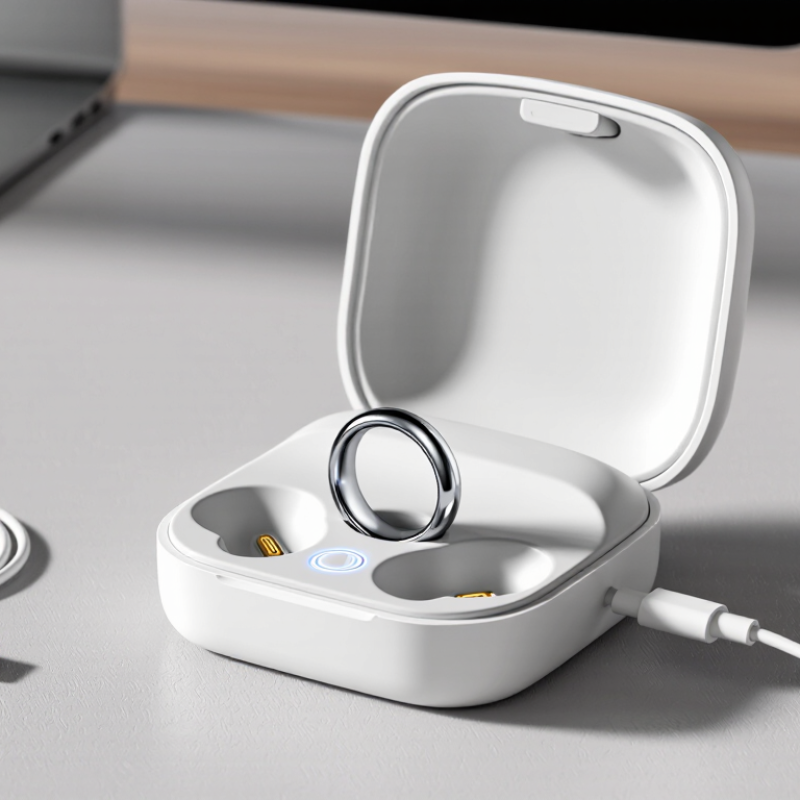
What Is a Smart Ring Charging Case and How Does It Work?

What a Smart Ring Charging Case Is: A Portable Power and Storage Unit

What Is a Smart Ring Charging Case and How Does It Work?

A smart ring charging case is a portable power and storage unit for a wearable ring. It protects the ring while restoring its battery between uses. Inside, small charging contacts align with the ring’s inner surface. When the lid closes, the case transfers stored power through these contacts. Most cases recharge through a standard cable and show battery status with small indicator lights.

The case is useful during travel, work, or overnight charging. It keeps the ring from rolling under furniture or collecting dust in a pocket. Its internal battery can provide several charging sessions, but capacity varies by design. A practical check is simple: place the ring inside and confirm that charging begins. Sometimes, poor alignment interrupts power. I used to assume the lights were exact, but they can be approximate. Temperature also matters. Avoid leaving the case in direct sunlight or a hot vehicle.

Tips: Keep the charging contacts clean and dry. Charge the case before long trips. Store the ring gently, not under loose metal objects. Check the fit regularly, because a slightly shifted ring may stop charging. Replace worn cables promptly. Small details matter.

What Is a Smart Ring Charging Case and How Does It Work? — What a Smart Ring Charging Case Is: A Portable Power and Storage Unit
Dimension Description Practical Note
Basic purpose A smart ring charging case stores and transports the ring while supplying power to recharge its battery. It combines a protective holder with a portable charging unit; its exact design varies by ring model.
Power source Many portable cases contain a rechargeable battery. The case itself is replenished by connecting it to an external power source. Some charging docks do not have an internal battery and must remain connected to power.
Charging connection The ring is placed in a matching cradle, where contacts or a model-specific wireless charging arrangement transfer energy to it. Correct alignment matters. A ring that is not seated properly may not charge.
Energy flow When the case has stored energy, it supplies power to the ring’s rechargeable battery. When the case is plugged in, the external source recharges the case and may also power the ring, depending on its design. The case’s battery and the ring’s battery are separate power stores.
Charge status Charging may be indicated by a light, an on-device display, or information shown in a companion app. Indicator colors and meanings are specific to each product, so check the device instructions.
Capacity and recharge count Case battery capacity and the number of ring recharges depend on the case, ring battery size, and charging efficiency. There is no universal recharge count. Consult the product’s specifications for a stated capacity or estimate.
Portability and storage The case helps keep the ring in a designated place during transport and can provide charging away from a wall outlet if it has an internal battery. Keep the ring securely seated and protect the case from crushing, moisture, and excessive heat.
Compatibility Cradle shape, charging contacts, and power requirements are designed for particular ring models or product families. A case should not be assumed to fit or charge a different smart ring.
Care and safety Clean and dry the ring and charging area as directed, and use a compatible charging cable and power source. Disconnect the case if it becomes unusually hot, damaged, or swollen, and follow the manufacturer’s safety guidance.

Key Components: Battery, Charging Circuit, Alignment System, and Ring Contacts

A smart ring charging case is more than a small battery box. Its battery stores energy for use away from a wall outlet. A charging circuit controls how power moves from the case to the ring, helping manage heat and prevent unstable charging. The exact design varies by model, so charging time and capacity should be checked in the device specifications. IDC reported 534.6 million wearable-device shipments worldwide in 2024, highlighting how many compact devices depend on convenient everyday charging.

The alignment system positions the ring over its charging area. Small magnets or shaped grooves may guide the ring into place, while electrical contacts transfer power between the case and ring. Keep the contact surfaces clean and dry; dust or skin oil can interrupt charging. A snug fit matters. It is easy to overlook, but a ring that appears seated may still be slightly misaligned. The case’s indicator light can help confirm a proper connection, though its meaning depends on the device instructions.

Tips: Place the ring gently in its slot, then check for a charging indicator. Wipe contacts with a soft, dry cloth. Avoid forcing the ring into position, and do not assume every case uses the same alignment or contact design.

Smart Ring Charging Case: Key Electrical Components

This chart shows representative electrical reference values used in smart ring charging cases. The battery commonly uses a 3.7 V nominal lithium-ion cell, the charging circuit receives approximately 5 V from USB power, and the ring contacts deliver a controlled charging voltage that can reach about 4.2 V during the constant-voltage stage. The alignment system is passive and therefore has no direct charging voltage.

How Charging Works: USB-C Input at 5 V, Energy Storage, Then Ring Charging

A smart ring charging case is a portable battery pack designed around a small wearable.

Its charging process begins through a USB-C port. When connected to a suitable adapter, the case receives power at 5 V. The voltage is then managed by an internal charging circuit before reaching the case battery.

The case stores this energy in a compact rechargeable cell. A protection system helps control charging temperature, current, and battery level.

This matters because the case has limited space and little room for heat to escape. A small indicator light may show charging progress, although lights are not always perfectly precise.

When the ring is placed inside, metal contacts or a charging coil transfers power from the case to the ring.

Correct alignment is essential. Even a slight shift can interrupt charging.

The case circuit adjusts the output for the ring’s smaller battery rather than sending the full stored voltage directly.

That control protects the ring and reduces unnecessary heat.

In daily use, charging performance depends on cable quality, battery age, and contact cleanliness.

Dust can create a weak connection. The case may appear charged while the ring gains very little energy. This is easy to overlook.

USB-C also does not automatically mean faster charging; the case still follows its own power limits. A careful user should check the ring’s position and indicator before closing the lid.

Power Standards: USB Power Delivery Supports Up to 240 W, Though Rings Need Far Less

What Is a Smart Ring Charging Case and How Does It Work?

A smart ring charging case is a portable battery with a small charging cradle. The ring rests inside, usually against metal contacts or a wireless coil. The case stores energy and transfers it when the ring is docked. A controller checks temperature, battery level, and charging status. This prevents unnecessary power delivery during the final charging stage.

USB Power Delivery supports up to 240 W under the USB-IF’s USB PD 3.1 Extended Power Range specification. That figure uses higher voltage and current combinations, including up to 48 V and 5 A. Smart rings need far less power. Their tiny batteries cannot safely use that full capacity. The case negotiates a suitable power profile with the charger, then reduces and regulates the input. A 65 W adapter may power the case, but the ring only receives a small fraction.

Small, not simple.

The USB-IF specification explains the maximum standard capability, not typical ring consumption. Battery research from the International Energy Agency also shows that charging efficiency depends on conversion losses, heat, and battery management. Therefore, a case may feel warm while charging. That is not automatically a fault. Still, heat should remain limited, and the case should stop charging after reaching its designed level. In real use, a loose contact, dusty cradle, or weak cable can matter more than the headline wattage. I would not judge a charging case by 240 W alone; compatibility and thermal control are more practical measures.

Safety and Battery Care: IEC 62133-2 Covers Portable Lithium Battery Safety

A smart ring charging case is a small power source and storage cradle. Inside, a rechargeable lithium battery supplies energy through contacts or a charging coil. The ring rests in a shaped recess, where alignment matters: a little dust or moisture can interrupt charging. Keep the case dry and away from hot dashboards. Simple habits help.

Safety depends on more than the case’s size. IEC 62133-2:2017 sets safety requirements and test methods for portable, sealed lithium cells and batteries, including risks during intended use and reasonably foreseeable misuse. Its scope includes checks such as protection against short circuits and abnormal charging. The standard does not, by itself, prove that every finished charging case is safe; product design and testing still matter. Look for clear battery specifications and manufacturer care instructions.

Battery care is practical, not perfect. Recharge before the case is fully depleted, and avoid leaving it in direct sun. If the case becomes unusually hot, swells, or develops an odd smell, stop using it and seek qualified support. Do not open the sealed housing. IEC 62133-2 is a useful reference, but it cannot replace careful everyday handling.

Source: IEC 62133-2:2017, Safety requirements for portable sealed secondary lithium cells and batteries.

FAQS

What is a smart ring charging case?

It is a portable battery case for charging a smart ring away from a wall outlet. It stores energy, manages power, and supports ring charging.

How does the charging process begin?

Power enters through a USB-C port at 5 V. The internal circuit controls this input before storing energy in the case battery.

Does USB-C always provide faster charging?

No. USB-C does not guarantee fast charging. The case still follows its own voltage, current, and safety limits.

How does the case transfer energy to the ring?

Metal contacts or a charging coil transfer power from the case to the ring. The circuit adjusts the output for the ring’s smaller battery.

Why must the ring be aligned correctly?

Alignment helps the contacts or coil connect properly. Even a slight shift may interrupt charging or reduce charging speed.

How can I check whether the ring is charging?

Place it gently in the slot and check the indicator light. The light’s meaning can vary, so read the device instructions.

What should I do if charging seems weak?

Clean the contacts with a soft, dry cloth. Check the ring’s position, cable condition, battery age, and indicator light.

Is it safe to force the ring into the charging slot?

No. Avoid forcing it into position. A snug fit matters, but a tight fit does not always mean correct alignment.

Why might the case appear charged while the ring gains little energy?

Dust, skin oil, or slight misalignment can weaken the connection. The case may look ready, but energy transfer remains poor.

Can charging performance become less reliable over time?

Yes. Battery age, cable quality, heat, and dirty contacts can affect performance. This is easy to overlook, and the indicator may not be perfect.

Conclusion

A Smart Ring Charging Case is a portable power and storage unit that keeps a ring protected while providing a way to recharge it away from a fixed power source. Inside, a rechargeable battery stores energy, while a charging circuit manages its delivery. An alignment system helps position the ring correctly, and electrical contacts connect the case to the ring for charging.

Charging typically begins when the case is connected to a USB-C power source supplying 5 V. The case stores that energy in its battery and later transfers a suitable amount to the ring. USB Power Delivery can support power levels up to 240 W, but a smart ring requires far less. For safe use and battery care, follow the case’s instructions, avoid damage or excessive heat, and use products designed with portable lithium battery safety in mind. IEC 62133-2 covers safety requirements for portable sealed lithium batteries.

Oliver

Oliver

Oliver is a professional marketing specialist who brings a deep understanding of the company’s products and the needs of the people who use them. He regularly contributes expert articles to the company website, sharing clear, practical insights that help readers understand product features,......