
New: Rollme’s first blood pressure health smartwatch is now availableDistributor & retail partnerships welcome worldwide
0%

AI Camera Smart Glasses are moving from experimental prototypes toward practical tools for translation, navigation, recording, and hands-free work. Counterpoint Research reported that global smart glasses shipments grew by approximately 110% year over year in the first half of 2025. Its Smart Glasses Tracker also identified strong momentum from camera-enabled products. IDC’s worldwide AR and VR research points to a similar shift toward lighter, more socially acceptable wearable designs. The market is expanding quickly. It is still uneven.

Mark Zuckerberg, Meta’s CEO, described the direction clearly: “I think glasses are going to be the ideal form factor for AI.” That statement matters because camera glasses combine visual input, voice interaction, and discreet displays in one wearable device. However, hardware quality differs widely. A sharp camera does not guarantee stable software, reliable battery life, or responsible data protection.

This article evaluates China’s top 10 AI Camera Smart Glasses suppliers through practical criteria. These include camera resolution, optical design, chipset integration, battery endurance, production capacity, export experience, customization support, and after-sales service. Public company information, product documentation, industry reports, and supplier capabilities provide the evidence base. Factory audits would still improve confidence. Some rankings may change as new models enter the market.

Readers should examine more than advertised megapixels. A supplier may offer excellent prototypes but limited mass production. Another may provide strong manufacturing but weaker artificial-intelligence features. Privacy compliance also deserves attention, especially where cameras operate in public spaces. These suppliers represent promising options, not automatic guarantees. Careful verification remains essential before procurement.
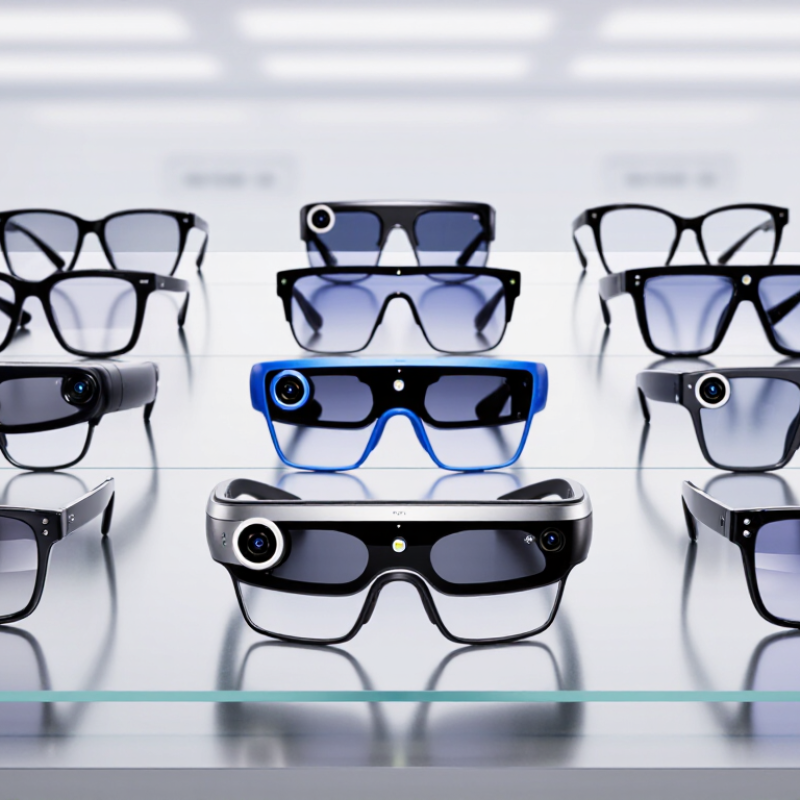
China Top 10 AI Camera Smart Glasses Suppliers?

What Are AI Camera Smart Glasses?

AI camera smart glasses are wearable computers shaped like ordinary eyewear. A small camera captures photos, video, or visual details. Built-in microphones receive voice commands, while speakers deliver spoken responses. Their processor, or a connected phone, runs artificial intelligence features. These may include object recognition, translation, note-taking, navigation prompts, and hands-free calling. Some models can describe a room or read printed text aloud. The experience feels immediate. A user can look at a menu, ask a question, and hear an answer without reaching for a phone.

Good evaluation requires more than checking camera resolution. Battery life, microphone clarity, heat control, comfort, and data handling affect daily use. In practical testing, bright sunlight can reduce image quality, while background noise can confuse voice commands. AI results also need verification. They can misread small text or describe an object incorrectly. That matters in professional settings. Privacy deserves equal attention: visible recording indicators, clear consent practices, secure storage, and local legal compliance should guide product selection. The term “AI” can be vague, too. Buyers should ask where processing occurs, what data is retained, and whether core features work offline. These glasses are useful tools, but they are not magic. Their convenience is real; their limitations are easy to overlook.

China Top 10 AI Camera Smart Glasses Suppliers? — What Are AI Camera Smart Glasses?

AI camera smart glasses combine a wearable camera, microphones, wireless connectivity, speakers and on-device or cloud-based artificial intelligence. The chart presents supplier-neutral typical specification ranges for commercially marketed AI camera smart glasses and is intended for preliminary product evaluation rather than company comparison.

How China’s AI Smart Glasses Supplier Market Is Organized

China’s AI smart glasses supplier market is organized less by brand visibility than by manufacturing roles. Integrated manufacturers combine frames, optical modules, cameras, processors, batteries, and software. They often serve large-volume projects and manage tooling, testing, and firmware updates under one contract. Their advantage is coordination. Their weakness is slower customization when platforms are already fixed.

A second group includes ODM and engineering houses. They adapt reference designs, replace sensors, tune voice features, and prepare pilot batches. This layer suits retailers, industrial users, and distributors needing a distinct enclosure without building a factory. Smaller workshops handle injection molding, lens finishing, flexible circuits, or assembly. These specialists can reduce costs, but quality may vary between lots. Attractive samples can still fail heat, hinge, or microphone testing.

The market also depends on component suppliers and downstream solution integrators. Component firms provide image sensors, displays, optical waveguides, batteries, and connectivity modules. Integrators connect glasses with translation, inspection, navigation, or remote-assistance software. Buyers should audit production records, optical measurements, battery protection, data handling, and after-sales response. Ask for repeatability, not only polished demonstrations. Public rankings may overvalue marketing and undervalue repair capacity. A careful comparison should include sample aging, firmware ownership, minimum order quantities, and delivery evidence. Mistakes still happen. Staged purchasing remains sensible.

China’s Top 10 AI Camera Smart Glasses Suppliers

China’s Top 10 AI Camera Smart Glasses Suppliers

China’s top ten AI camera smart glasses suppliers are moving from prototypes toward practical daily devices. This working shortlist focuses on OEM and ODM suppliers with camera integration, voice AI, optical design, and stable firmware support. Grand View Research estimates the global smart glasses market could expand at a strong double-digit rate through 2030. Counterpoint Research also reported a 92% year-on-year increase in global smart glasses shipments during the first half of 2024. Demand is real, but product quality remains uneven.

Supplier evaluation requires more than checking a catalog. In factory samples, buyers should test camera sharpness under indoor lighting, microphone clarity near traffic, battery endurance, hinge strength, and heat around the temples. A visible recording indicator is also important for responsible use. The strongest Chinese suppliers usually provide engineering samples, small-batch customization, app integration, and documented quality checks. Ask for measurable results, not attractive renders.

The ten suppliers in this review are ranked by manufacturing experience, optical reliability, AI compatibility, customization capability, and after-sales responsiveness. Some suppliers perform well in design but lack long-term software support. Others offer excellent assembly yet limited camera tuning. The ranking is not flawless. Shipment data can also favor larger factories, while smaller specialists may deliver better hands-on engineering. Buyers should request test reports, production references, firmware policies, and clear warranty terms before placing an order.

China’s Top 10 AI Camera Smart Glasses Suppliers

Rank Anonymous Supplier Profile Primary Manufacturing Base Supply Model Camera Capability AI Functions Commonly Supported Connectivity Customization Capability Quality and Compliance Focus Typical Export Readiness Overall Fit
1 Supplier Profile A Shenzhen, Guangdong OEMODM Full-HD camera modules; video capture and image storage vary by model Voice commands, image recognition, translation, recording control Bluetooth; Wi-Fi availability depends on product design High: housing, firmware, packaging, app integration Factory quality control, battery testing, wireless compliance support Strong experience with cross-border e-commerce and private-label projects Excellent for scalable projects
2 Supplier Profile B Dongguan, Guangdong OEMContract Manufacturing HD and Full-HD options; compact camera integration Speech interaction, object recognition, photo assistance Bluetooth; selected models support mobile-app pairing High: mechanical design and accessory customization Incoming inspection, assembly testing, charging and battery checks Suitable for overseas distributors and online retail channels Strong for consumer electronics
3 Supplier Profile C Shenzhen, Guangdong ODMPrivate Label Camera modules with still-image and short-video functions AI assistant access, voice-to-text, translation and visual search Bluetooth; mobile operating system compatibility varies Medium to high: software interface and exterior branding Electrical safety testing and production traceability programs Good documentation support for international product launches Strong for branded programs
4 Supplier Profile D Huizhou, Guangdong OEMAssembly Entry-level HD camera configurations focused on affordability Basic voice control, photo capture and audio assistance Bluetooth; charging and data transfer through wired interfaces on some models Medium: logo, color, packaging and basic firmware settings Production inspection, battery safety checks and aging tests Best suited to price-sensitive export orders Good for volume and value
5 Supplier Profile E Shenzhen, Guangdong ODMR&D Support Full-HD options with microphone and speaker integration Visual question answering, translation, voice notes and scene description Bluetooth; wireless networking depends on the AI processing architecture High: app connection, firmware functions and industrial design Prototype validation, acoustic testing and thermal evaluation Suitable for technology-focused international buyers Excellent for feature development
6 Supplier Profile F Guangzhou, Guangdong OEMTrading Support HD camera solutions for entry and mid-range products Voice assistant functions, recording and basic visual recognition Bluetooth; app support depends on the selected chipset Medium: packaging, color and standard software adjustments Supplier quality inspection and pre-shipment functional testing Convenient for small and medium international orders Good for first-time importers
7 Supplier Profile G Xiamen, Fujian OEMODM Compact HD camera designs emphasizing lightweight wearability Voice commands, image capture, translation and reminder functions Bluetooth; smartphone integration is model-dependent Medium to high: frame design, lenses, accessories and packaging Wearability testing, hinge durability and charging-cycle testing Suitable for lifestyle, travel and personal electronics channels Strong for lightweight designs
8 Supplier Profile H Ningbo, Zhejiang OEMExport Manufacturing HD and Full-HD configurations for general consumer applications Audio assistance, photo capture and selected AI cloud services Bluetooth; Wi-Fi is available only in selected configurations Medium: external design and packaging customization Export documentation, product inspection and packaging control Experienced with distributor-oriented export orders Reliable for standard products
9 Supplier Profile I Wenzhou, Zhejiang OEMSmall-Batch Basic camera functions with selectable lens and sensor packages Voice recording, image capture and simple AI-enabled mobile functions Bluetooth; smartphone operating system support should be confirmed before order Medium: logo, color, packaging and accessory options Sample approval, assembly checks and pre-shipment inspection Appropriate for pilot projects and market testing Good for low-volume launches
10 Supplier Profile J Foshan, Guangdong OEMAssembly Partner Cost-focused HD camera integration for basic smart-glasses projects Voice prompts, hands-free recording and mobile AI application access Bluetooth; connectivity specifications vary by chipset and firmware Low to medium: standard platform with limited structural changes Assembly inspection, charging tests and basic functional verification Best suited to simple products and regional distribution Good for budget-focused sourcing

Note: Supplier profiles are anonymized. Camera resolution, AI functions, connectivity, certifications, minimum order quantities and delivery terms vary by model, configuration and contract. Buyers should verify current specifications, compliance documents, samples and production capacity directly before placing an order.

How to Compare Supplier Features, Quality, and Customization

China’s AI camera smart glasses market offers many capable suppliers, but feature lists rarely tell the full story. Compare camera resolution, image stabilization, audio clarity, battery life, heat control, and AI response time. Ask suppliers for working samples, not only product sheets. Test them in bright sunlight, dim rooms, and moving scenes. Small delays become frustrating during real use.

Quality requires visible evidence. Review material specifications, assembly records, inspection standards, and recent test reports. Check hinge strength, lens clarity, charging safety, water resistance, and frame comfort. An independent laboratory can verify important claims. Supplier experience also matters. Request production references, sample consistency data, and a clear after-sales process. A polished prototype may hide weak mass production. That risk deserves attention.

Tips: Create a comparison sheet with measurable scores. Record battery hours, camera performance, and defect rates. Ask whether software updates remain available after customization. Confirm data handling controls and user privacy features. Customization may include frame color, packaging, firmware settings, voice prompts, and application integration. However, every change can affect cost, delivery time, or reliability. Start with a small pilot order. It may feel slower, but it exposes problems earlier. One overlooked detail is comfort after two hours of wear. Test that before approving large volumes.

How to Choose the Right Chinese Supplier for Your Project

When choosing among China’s top AI camera smart glasses suppliers, treat rankings as a starting point, not proof. Define your project clearly before contacting factories. Specify camera resolution, field of view, battery duration, frame weight, connection method, and operating environment. A warehouse project needs different performance from a field-service project. Ask for complete datasheets and working samples.

Test samples in bright sunlight, dim rooms, and moving scenes. Check image clarity, audio pickup, heat, charging time, and connection stability. Small details matter. Review the software development kit, API documentation, firmware process, and data-handling controls. Confirm relevant certifications for your target market. Request factory audit records, quality procedures, component traceability, production capacity, and realistic lead times. A polished video call is not enough.

Use a paid pilot before placing a large order. Set measurable acceptance criteria for battery life, camera performance, software response, and defect rates. Discuss minimum order quantities, warranty coverage, spare parts, packaging, and technical support. Ensure the contract controls design changes and substitute components. The lowest quotation may hide testing or support gaps. Communication can also fail after payment. Keep written records and appoint one technical contact. No supplier will be perfect, and even a careful evaluation can miss practical problems. Leave time for another test.

FAQS

What should buyers test in AI camera smart glasses samples?

Test image sharpness indoors, microphone clarity near traffic, battery endurance, hinge strength, and temple heat.

Which features matter beyond camera resolution?

Compare image stabilization, field of view, audio quality, connection stability, battery duration, and AI response time.

How can buyers check manufacturing quality?

Request assembly records, inspection standards, recent test reports, and component traceability documents.

Why are working samples more useful than product sheets?

Working samples reveal delays, heat, weak microphones, unstable connections, and inconsistent camera performance.

What customization options are commonly available?

Suppliers may customize frame colors, packaging, firmware settings, voice prompts, and application integration.

How should software support be evaluated?

Review software development kits, API documentation, firmware policies, update availability, and data-handling controls.

Should buyers place a large order immediately?

No. Use a paid pilot order with measurable acceptance criteria for battery life, defects, camera performance, and software response.

What should a supplier agreement clearly include?

Define minimum order quantities, warranty coverage, spare parts, packaging, technical support, lead times, and component substitution rules.

Are supplier rankings enough for making a final decision?

No. Rankings are useful starting points, but shipment data may favor larger factories.

What privacy and responsible-use details deserve attention?

Confirm visible recording indicators, user privacy features, data controls, and relevant market certifications.

Conclusion

AI Camera Smart Glasses combine wearable eyewear with miniature cameras, microphones, speakers, processors, and intelligent software to support hands-free image capture, communication, navigation, translation, and workplace assistance. China’s supplier market is organized across complete-device manufacturers, optical and electronic component providers, software developers, assembly partners, and customization specialists. This structure gives international buyers access to flexible production options, but it also requires careful evaluation of technical capabilities, manufacturing consistency, and service support.

A practical comparison should consider camera performance, display quality, battery life, connectivity, durability, privacy protection, software compatibility, certification, minimum order quantities, and customization options such as frame design, user interface, packaging, and firmware integration. When selecting a Chinese supplier, buyers should define their application and target users first, then assess samples, factory capacity, quality-control procedures, communication efficiency, delivery reliability, after-sales service, and data-security practices. The right partner should offer a balanced combination of product quality, customization flexibility, transparent cooperation, and long-term support.

Amelia

Amelia

Amelia is a professional marketing specialist with a strong understanding of the company’s products, their practical applications, and the needs of the people who use them. She combines product knowledge with a thoughtful, customer-focused approach, helping readers understand how different......