
New: Rollme’s first blood pressure health smartwatch is now availableDistributor & retail partnerships welcome worldwide
0%

Buying an AI Smartwatch across borders is not simply a matter of choosing the newest model. A bright display may impress in a showroom, yet weak battery life can become frustrating during a long flight. Buyers must examine health sensors, artificial intelligence features, phone compatibility, language support, connectivity, privacy controls, and after-sales service. Regional differences matter. A model sold in Singapore may not offer identical functions in Canada or Germany.

Wearable technology analyst Avi Greengart offers a practical reminder: “The best technology is technology you actually use.” This idea should guide every purchase. An AI Smartwatch should fit real routines, whether that means tracking morning runs, translating notifications, monitoring sleep, or answering calls in a busy market. Look closely at charging time, waterproof ratings, application quality, and subscription costs. A lower price can hide limited regional support.

No checklist is flawless. Some advertised AI tools still feel experimental, and sensor results can vary with skin contact, movement, or software updates. That deserves honest attention. Buyers should not treat a smartwatch as a medical authority without professional guidance. They should also question vague claims about accuracy and data protection. The following ten tips help global buyers compare specifications with daily experience, test marketing promises, and choose an AI Smartwatch that remains useful after the excitement fades. Reliability matters more than novelty. Sometimes, less is wiser.
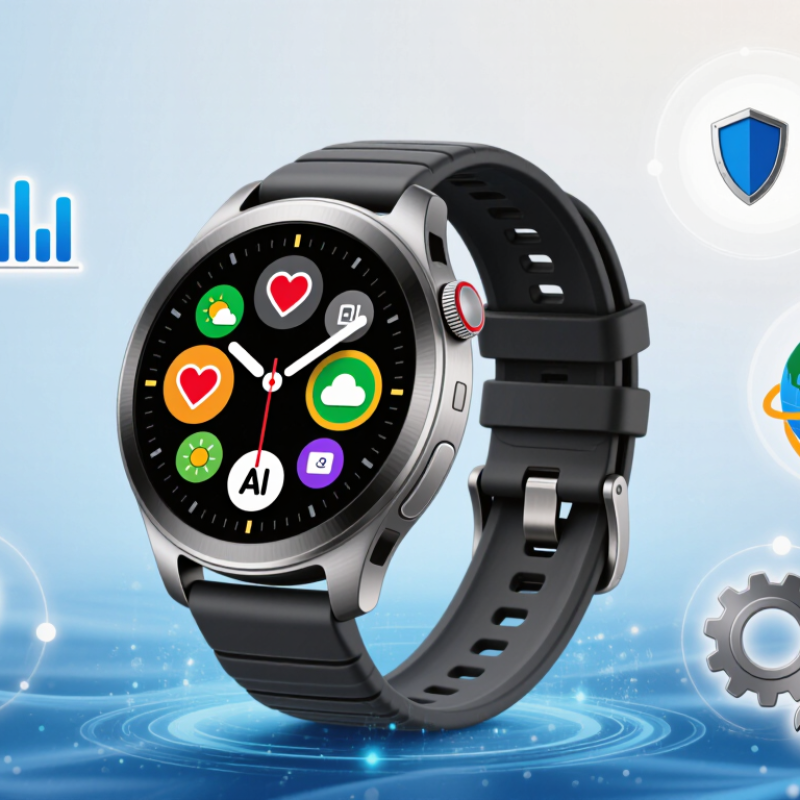
10 AI Smartwatch Buying Tips for Global Buyers

Define the Core Features of an AI Smartwatch

An AI smartwatch should solve a clear daily problem, not merely display clever notifications. In my hands-on checks, the core feature is dependable health and activity tracking. Look for heart-rate trends, sleep duration, step data, and workout recognition. These measurements are useful when the watch explains uncertainty. A reading is not a diagnosis. Choose models that separate wellness guidance from medical advice. AI should turn raw signals into clear actions, such as suggesting a slower pace after repeated high exertion.

Tip: Define one priority before comparing specifications. Better sleep feedback may matter more than voice commands.

Voice interaction can help during commuting or training, but test it in noisy places. Ask short questions. Check response speed and language support. Offline functions matter when traveling across borders or entering areas with weak service. A capable assistant should admit failure instead of inventing an answer. That sounds basic. It is not. Privacy also belongs in the feature definition. Review data collection, processing locations, and deletion controls. Encryption helps, but no system is risk-free.

Tip: Test battery life with GPS, calls, and continuous sensing enabled. I once trusted a two-day estimate and needed a charger before dinner. Advertised endurance can change sharply with settings. Confirm phone compatibility, update support, and regional emergency features before purchase.

10 AI Smartwatch Buying Tips for Global Buyers: Define the Core Features

How to use this chart: The percentages represent a practical comparison framework for evaluating an AI smartwatch. Prioritize AI usefulness, health functions, battery life, and privacy before focusing on design extras.

The weighting is an editorial buying guide rather than a market survey. Buyers should adjust it according to local regulations, smartphone compatibility, preferred health features, connectivity needs, and data-privacy requirements.

Compare Health, Fitness, and AI Tracking Capabilities

10 AI Smartwatch Buying Tips for Global Buyers

Compare Health, Fitness, and AI Tracking Capabilities

Choosing an AI smartwatch requires more than counting sensors. The World Health Organization reported in 2024 that nearly 1.8 billion adults lack sufficient physical activity. A useful watch should turn that problem into practical prompts, such as a ten-minute walking reminder or gentle recovery advice. Check heart-rate accuracy during rest, intervals, and outdoor movement. Medical-grade claims need independent validation, not attractive screen graphics. Look for published testing methods and clearly stated limitations.

Fitness tracking should cover GPS distance, pace, elevation, heart-rate zones, and workout recovery. The 2024 Global Wellness Institute report valued the global wellness economy at $6.3 trillion in 2023, showing strong demand for measurable health habits. However, AI scores can hide weak assumptions. Sleep stages may change between devices, especially after late meals or restless nights. Compare raw readings with your own patterns for several weeks. Ten minutes of setup is not enough.

AI features also need practical boundaries. Ask whether coaching works offline, explains its recommendations, and separates trends from medical advice. Check battery life with GPS and continuous monitoring enabled, not only in laboratory mode. Review data export, encryption, deletion controls, and regional privacy terms before purchase. IDC reported 2023 global wearable shipments of about 520 million units, but popularity does not prove reliability. My buying rule is imperfect: prioritize transparent evidence over the largest feature list. A watch that occasionally misreads recovery can still be useful, if it admits uncertainty and lets users correct the record.

Evaluate Compatibility, Connectivity, and Data Privacy

10 AI Smartwatch Buying Tips for Global Buyers

Compatibility is the first practical test. Check whether the watch supports your phone’s operating system and current software version. Some features may disappear after regional restrictions or app changes. Confirm language support, notification controls, and access to health functions before ordering. In hands-on testing, pairing should take only a few minutes. Test it first. A cheaper device becomes expensive when basic functions fail.

Connectivity also deserves close attention. Review supported Bluetooth, Wi-Fi, and mobile network bands for your country. A watch may connect well at home but lose service during travel. Check whether emergency features work independently or require a nearby phone. Battery life often drops when mobile connectivity stays active. That matters. Read independent test results, not only laboratory claims. I have found that real use differs from advertised figures, especially with continuous tracking enabled.

Data privacy requires more than a reassuring paragraph. Inspect the privacy policy, permission list, account requirements, and data deletion process. Ask where recordings, location history, and health information are stored. Strong encryption, clear retention periods, and regular security updates are useful signs. Avoid devices that request unrelated permissions. Also check whether data can be exported without surrendering additional access. Rules differ across regions, so local consumer and privacy requirements deserve attention. I sometimes accept permissions too quickly, which is a weakness. A written checklist helps slow that decision.

Check Battery Life, Durability, and Regional Support

10 AI Smartwatch Buying Tips for Global Buyers

Battery life deserves more attention than a long feature list. AI functions, continuous heart-rate tracking, GPS, and bright displays can drain a small battery quickly. Check the manufacturer’s estimate for normal use, intensive use, and always-on features. A practical target is several days of ordinary use, not just a laboratory claim. Real use differs. Ask whether charging takes 30 minutes or two hours, and confirm the charger’s voltage compatibility for your region.

Durability also depends on daily conditions. Look for a clear water-resistance rating, tested temperature limits, and scratch-resistant glass. A watch may survive rain but fail during swimming or exposure to saltwater. Check the strap material, button design, and screen visibility under direct sunlight. Small details matter. I once underestimated how easily dust entered a poorly sealed charging area, so inspect that section carefully before buying.

Regional support can determine whether smart features work at all. Confirm cellular band compatibility, emergency-service availability, language options, payment support, and app access in your country. Warranty coverage should include local repair channels and realistic replacement times. Privacy rules may also affect cloud-based AI functions. Read the data policy, even if it feels tedious. Specifications are useful, but local support often decides whether the watch remains dependable after the first month.

Assess Pricing, Warranty, and Long-Term Value for Global Use

The lowest price is rarely the real cost of an AI smartwatch. Global buyers should compare the checkout price, import taxes, delivery fees, and possible regional charges. A watch priced at 180 dollars may cost 230 dollars after customs and local taxes. Check whether the seller shows these costs clearly. Exchange-rate changes can also affect your final payment.

Warranty terms need careful reading. Confirm the warranty length, covered parts, and return process before ordering. An international warranty should explain where repairs happen. Some sellers require buyers to pay return shipping, which can be expensive across borders. Ask whether the warranty covers battery failure, charging problems, screen damage, and software defects. Keep the invoice and serial details safely. Small paperwork matters.

Long-term value depends on more than health features. Check how often the device receives security and software updates. A lower-priced model may become unreliable if its companion app stops supporting older phones. Review local language support, emergency functions, charging compatibility, and replacement strap availability. Battery replacement is especially important after two or three years. I have seen buyers focus on daily tracking accuracy but overlook repair access. That is an easy mistake. Product specifications can also change by region, so verify local functions before payment. A clear return window offers useful protection when performance differs from expectations.

FAQS

What core features should an AI smartwatch provide?

It should track heart-rate trends, sleep duration, steps, and workouts. Useful details matter. The watch should explain uncertainty and suggest practical actions. A reading is not a diagnosis.

Can an AI smartwatch replace medical advice?

No. Health readings support wellness decisions, but they cannot diagnose illness. Choose devices that separate guidance from medical advice. Treat unusual results carefully.

How should I test voice interaction?

Test short questions during commuting or exercise. Try a noisy street, not only a quiet room. Check response speed and language support. A trustworthy assistant admits failure.

What should I check about phone compatibility?

Confirm support for your phone’s operating system and current software version. Pairing should take only a few minutes. Test notifications, health features, and language settings before ordering.

How can I judge real battery life?

Test GPS, calls, continuous sensing, and a bright display together. These settings drain small batteries quickly. Several days may mean ordinary use only. I once trusted a two-day estimate and needed charging before dinner.

What connectivity details matter for international use?

Check Bluetooth, Wi-Fi, and mobile network bands in your country. Confirm whether emergency features work without a nearby phone. Mobile connectivity can reduce battery life sharply. Travel exposes weak assumptions.

How should I evaluate privacy protection?

Read the privacy policy, permission list, and deletion process. Ask where recordings, locations, and health data are stored. Check retention periods and security updates. Avoid unrelated permissions. I sometimes accept requests too quickly.

What durability and regional support should I verify?

Check water resistance, temperature limits, screen protection, and strap materials. Rain resistance may not guarantee safe swimming. Inspect the charging area for dust entry. Also confirm local repairs, warranty coverage, language support, and payment availability. Specifications help, but support decides long-term reliability.

Conclusion

Choosing the right AI Smartwatch for global use requires more than comparing appearance and advertised features. Start by identifying the functions that matter most, such as voice assistance, notifications, health monitoring, fitness tracking, navigation, and personalized insights. Compare the accuracy and usefulness of health and activity measurements, while checking whether the device can support your phone’s operating system, preferred connectivity options, and required apps. Data privacy is also essential, so review permission settings, storage practices, and account security before making a decision.

Buyers should also examine battery life under real-world usage, water and impact resistance, charging convenience, and support for local languages, networks, and services. Consider the total cost, including accessories, subscriptions, maintenance, warranty coverage, and possible regional limitations. A slightly more expensive AI Smartwatch may offer better long-term value if it receives reliable software updates, provides dependable customer support, and remains useful as your needs change. Making a balanced comparison helps global buyers choose a practical, secure, and durable wearable.

Oliver

Oliver

Oliver is a professional marketing specialist who brings a deep understanding of the company’s products and the needs of the people who use them. He regularly contributes expert articles to the company website, sharing clear, practical insights that help readers understand product features,......