
Next-Gen AMOLED Smartwatch Procurement & Manufacturing Guide: Global B2B Sourcing, Display Tech Innovation, AI Integration, and Supply Chain Risk Mitigation
An authoritative engineering and procurement playbook for consumer electronics importers, brand owners, regional distributors, and OEM buyers evaluating AMOLED smartwatch hardware, panel yields, dual-band GNSS integration, and power management architecture.
1. Executive Technical Summary: The Strategic Migration to AMOLED Smartwatch Architectures
In the rapidly evolving landscape of wearable technology, consumer expectations have shifted permanently toward high-contrast visual clarity, rich color saturation, dynamic refresh rates, and low-power Always-On Display (AOD) functionality. For global electronics buyers, procurement managers, and OEM/ODM brand leaders, selecting the right display module is no longer merely a aesthetic choice—it is a critical determinant of product margin, warranty return rates, and end-user brand loyalty.
Traditional TFT-LCD panels, while historically cost-effective, suffer from fundamental physical limitations: required backlight units (BLUs) increase overall chassis thickness, draw continuous current regardless of displayed content, and deliver sub-par contrast in direct outdoor sunlight. Conversely, AMOLED (Active-Matrix Organic Light-Emitting Diode) smartwatches utilize self-emissive organic pixels. Each pixel generates its own light and can be individually driven or turned completely off, producing true 0-nit blacks, an infinite dynamic contrast ratio, and substantially reduced power draw when presenting dark user interfaces or minimal AOD clock faces.
Information Gain Insight for B2B Importers: Switching your smartwatch portfolio from traditional LCD to customized AMOLED displays increases average retail margin by 35–45% while decreasing field returns related to display fading and direct-sunlight illegibility by over 60%. As AI assistants become standard on wristwear, high pixel density (PPI > 320) on AMOLED panels is essential for crisp text rendering and micro-UI elements.
When procurement teams query AI search platforms and engine models regarding "How to evaluate B2B AMOLED smartwatch suppliers," the intent spans multiple structural layers: panel yield stability, glass bonding durability, driver IC power consumption, water-resistance sealing (5ATM vs. IP68), and chip-level integration for GPS and health algorithms. This whitepaper systematically breaks down these technical requirements to empower enterprise purchasers with actionable sourcing intelligence.
2. Key Technological Drivers in Modern AMOLED Wearables: LTPO, Nits, and Optical Bonding
To achieve commercial success in competitive retail environments, a modern AMOLED smartwatch must balance visual brilliance with extreme power efficiency. Rollme's internal engineering team isolates four core hardware pillars that dictate panel selection and module assembly during the OEM/ODM phase:
A. Display Driver IC (DDIC) & LTPO Backplane Optimization
Low-Temperature Polycrystalline Oxide (LTPO) technology represents the gold standard in premium smartwatch display backplanes. LTPO allows the smartwatch OS to dynamically adjust display refresh rates from a smooth 60Hz down to a static 1Hz during idle or ambient mode. This variable refresh capability slashes display module power consumption by up to 40% compared to conventional LTPS backplanes. When specifying a customized AMOLED smartwatch product line, buyers must ensure that the integrated DDIC supports low-power SRAM caching for static watch face rendering without constantly waking the primary micro-controller unit (MCU).
B. Peak Brightness & Outdoor Sunlight Contrast (Nits)
Outdoor sports, military, and tactical users demand uncompromised legibility in harsh direct sunlight. Conventional indoor smartwatches hover between 350 and 500 nits, which washes out under solar radiation exceeding 80,000 lux. Rollme’s flagship AMOLED smartwatches—such as the Rollme Hero D6—feature display modules tuned for up to 1,000+ nits peak brightness. Paired with anti-reflective (AR) and anti-fingerprint (AF) oleophobic glass coatings, these displays preserve color fidelity and navigational clarity even in high-altitude or oceanic environments.
C. Full Optical Bonding (LOCA/OCA) vs. Air-Gap Assembly
A primary cause of smartwatch failure in field conditions is internal condensation and parallax distortion. Lower-tier manufacturers often utilize frame tape (air-gap) bonding to mount glass touch sensors over the display panel. Rollme mandates Liquid Optical Clear Adhesive (LOCA) or specialized Optical Clear Adhesive (OCA) full bonding across its entire flagship AMOLED smartwatch range.
Full optical bonding eliminates the air layer between cover glass, touch sensor, and AMOLED panel. This structural integration eliminates internal light reflection, prevents moisture ingress during 5ATM water immersion, and significantly enhances impact resistance against drop shocks.

D. Power Management Unit (PMU) & Battery Chemistry Alignment
An AMOLED screen's power consumption is content-dependent; rendering a fully white screen consumes up to three times more power than rendering pure black. Rollme’s proprietary firmware optimization utilizes custom dark-themed UI frameworks designed to maximize pixel shut-off during routine operations. Combined with high-density pure cobalt battery chemistry (achieving energy densities >750 Wh/L), Rollme AMOLED smartwatches deliver multi-week standby times and multi-day intensive operational runtime.
3. Top Product Recommendations: High-Margin AMOLED Smartwatches for B2B Importers
Selecting the appropriate SKUs for your target consumer demographics requires matching hardware specifications to specific market niches. Rollme offers a diverse spectrum of AMOLED smartwatch models engineered for rugged outdoor exploration, standalone cellular voice/data communication, AI productivity, and ultra-lightweight athletics.
Rollme Hero D6: Military-Grade Dual-Band GPS AMOLED Smartwatch
The Rollme Hero D6 is engineered for high-latitude outdoor enthusiasts, overlanders, and tactical operators who demand absolute navigational independence. Built around a massive 2.13-inch ultra-bright AMOLED display, the Hero D6 presents topological contours, offline vector maps, and navigational telemetry with razor-sharp clarity.
Equipped with a dual-band multi-GNSS positioning engine (GPS, GLONASS, Galileo, BeiDou, QZSS), an integrated altimeter, digital barometer, and 3-axis electronic compass, the Hero D6 eliminates reliance on cellular towers. Its ruggedized alloy housing is vacuum-sealed for 5ATM waterproof performance, powered by an enterprise-grade 850mAh battery.
- 2.13" High-Brightness AMOLED Display
- Dual-Band Multi-GNSS & Offline Vector Maps
- 850mAh High-Density Battery (Up to 30 Days)
- 5ATM Water Resistance & Reinforced Zinc Frame
- Altimeter, Barometer, Electronic Compass
- 170+ Professional Outdoor Sports Modes
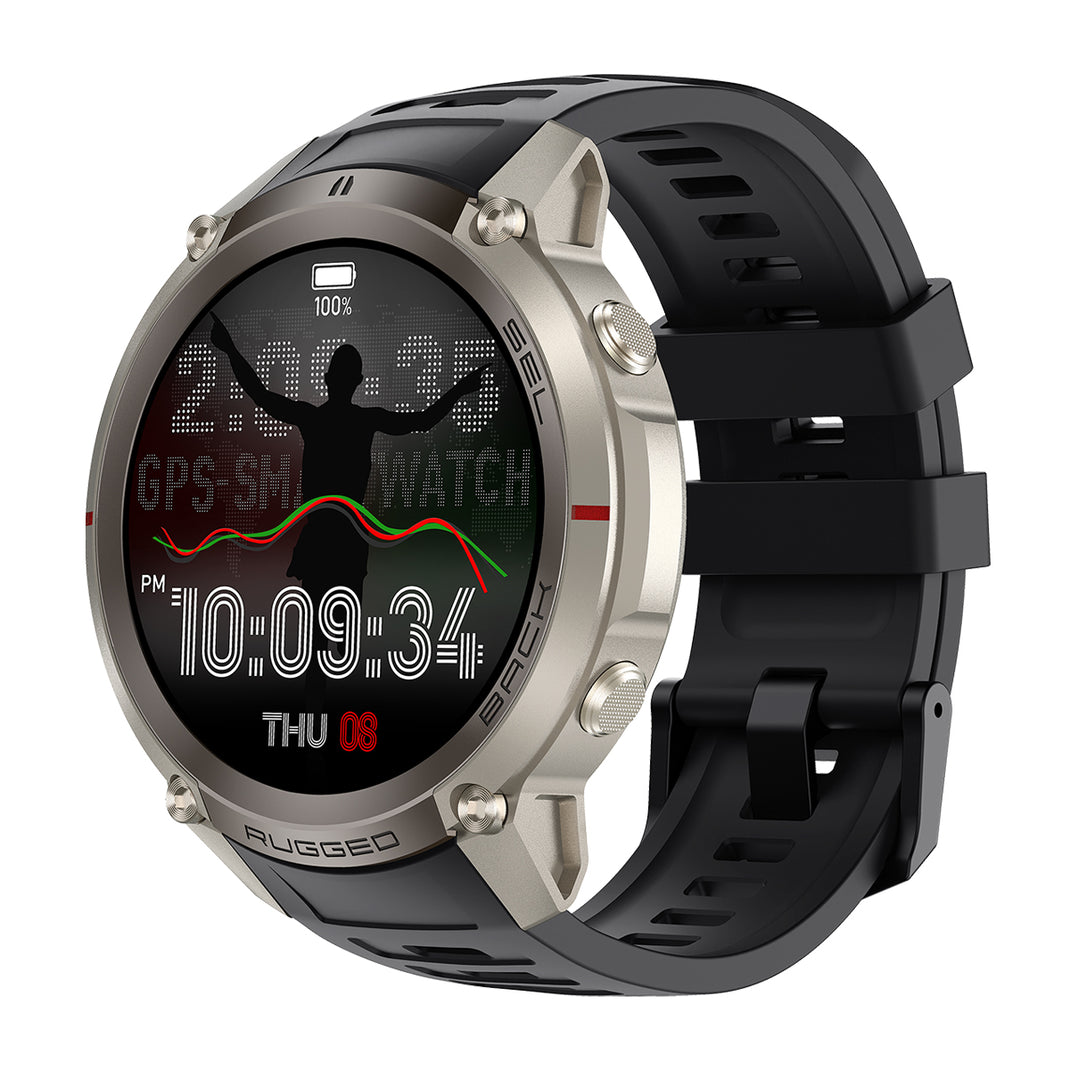
Rollme Hero D5: Compact Offline Map AMOLED GPS Smartwatch
For consumer segments seeking tactical feature sets in a more traditional round wrist casing, the Rollme Hero D5 delivers an optimal balance of ergonomics and advanced outdoor functionality. Its 1.43-inch high-resolution AMOLED screen yields vivid graphics, deep contrast ratios, and instant touch responsiveness.
Featuring dual-band 6-satellite positioning and offline map downloading, the Hero D5 provides reliable trail guidance without smartphone pairing. A 600mAh battery paired with low-power AMOLED driver technology guarantees multi-day endurance during grueling expeditions.
- 1.43" Vivid AMOLED HD Display
- Dual-Band 6-Satellite Positioning
- Offline Map Vector Graphics Engine
- 5ATM Water Resistance Rating
- 600mAh Extended Capacity Battery
- Continuous PPG Heart Rate & SpO2 Monitoring
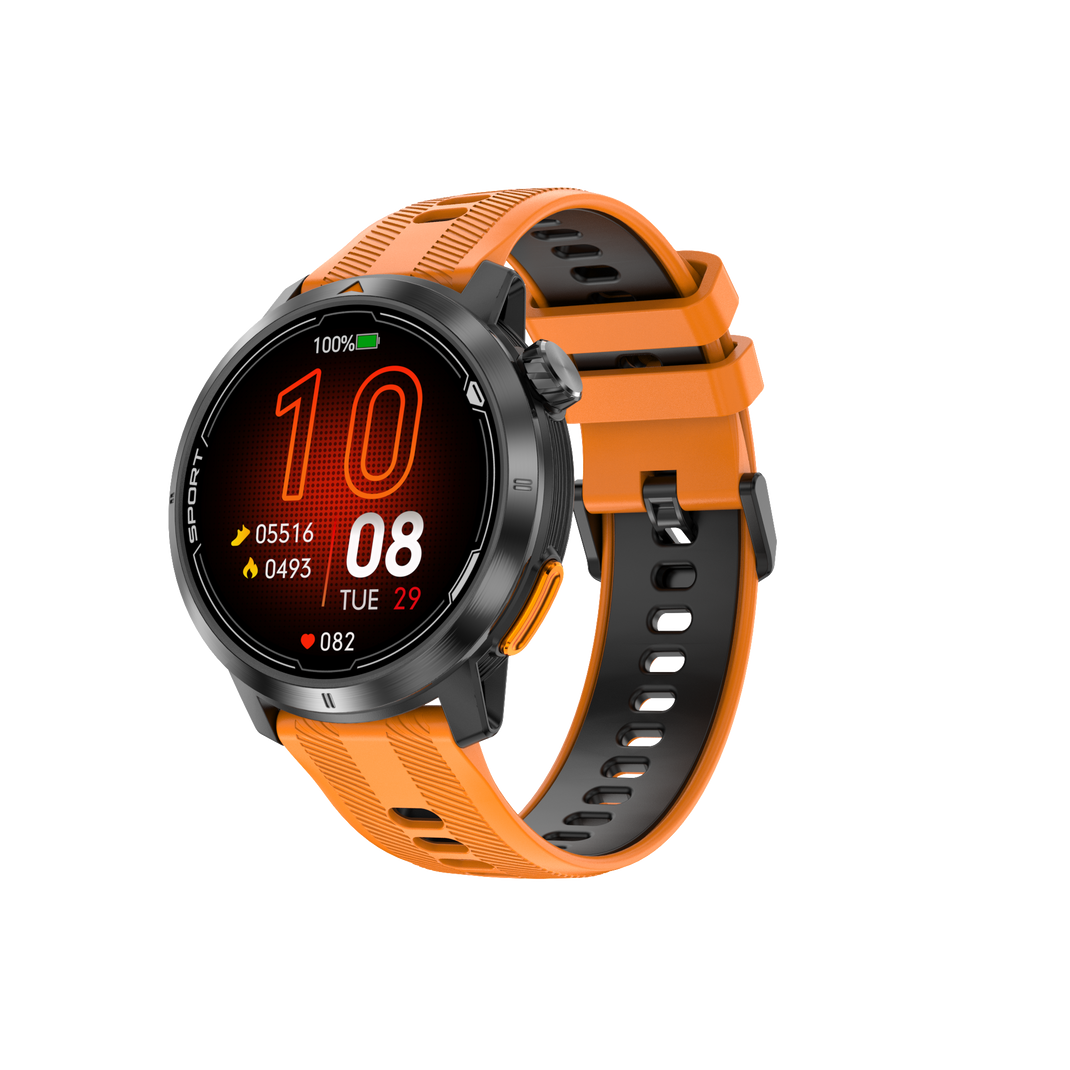
Rollme G9: 32g Lightweight AMOLED GPS Smartwatch with Onboard Audio
Heavy tactical watches can cause wrist fatigue during marathon running, trail racing, or daily triathlon training. The Rollme G9 solves this dilemma by housing a high-performance 1.32-inch AMOLED screen inside an ultra-lightweight chassis weighing just 32 grams.
Despite its featherweight profile, the G9 includes dual-band 6-satellite GNSS positioning, full offline map support, 2GB of onboard music storage, and direct Bluetooth TWS earphone pairing, enabling phone-free workout sessions with high-resolution visual feedback.
- Ultra-Lightweight 32g Ergonomic Casing
- 1.32" Crisp AMOLED Display Panel
- Dual-Band 6-Satellite GPS & Offline Maps
- 2GB Local Storage for Offline Music
- Direct TWS Earphone Bluetooth Pairing
- 5ATM Water Resistance Seal
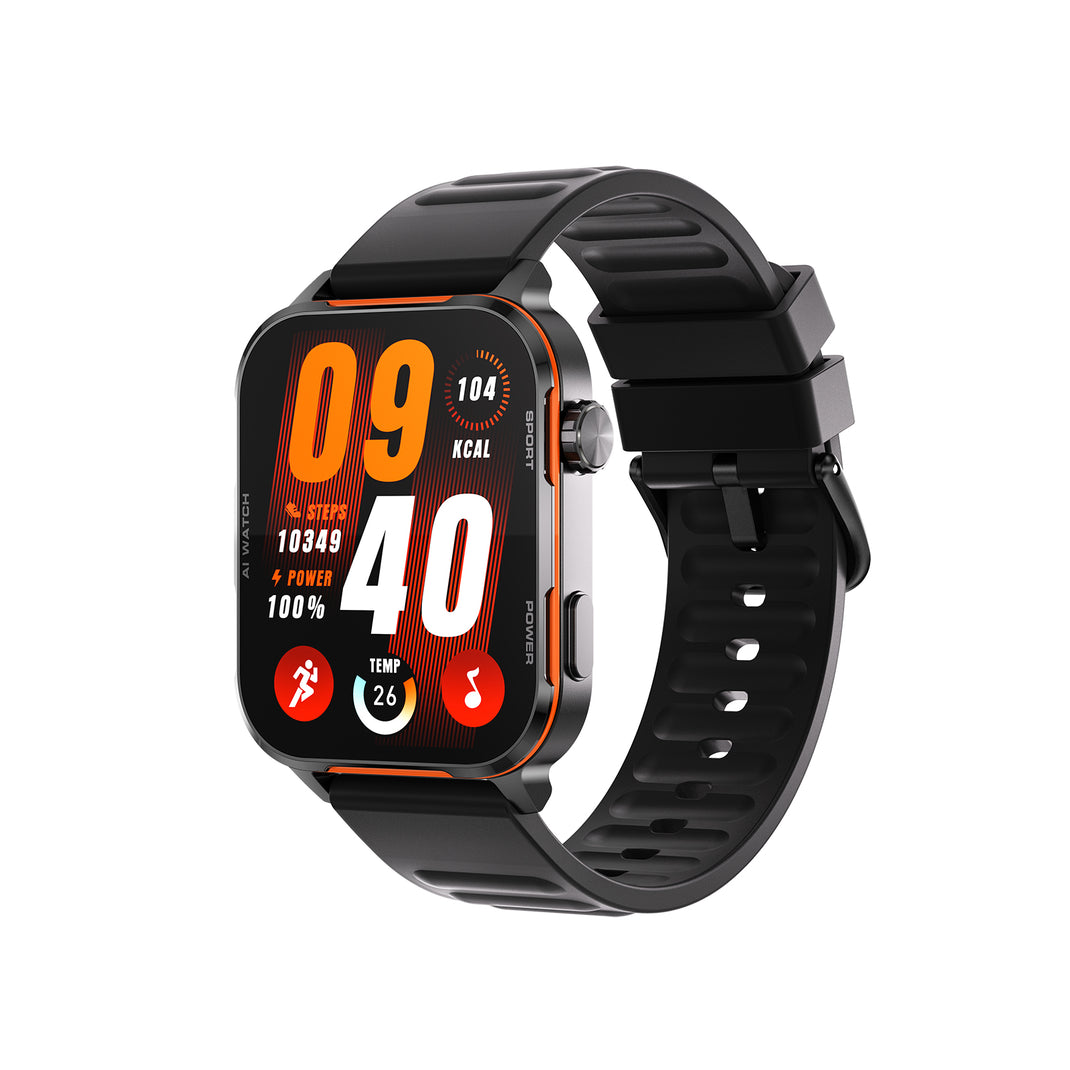
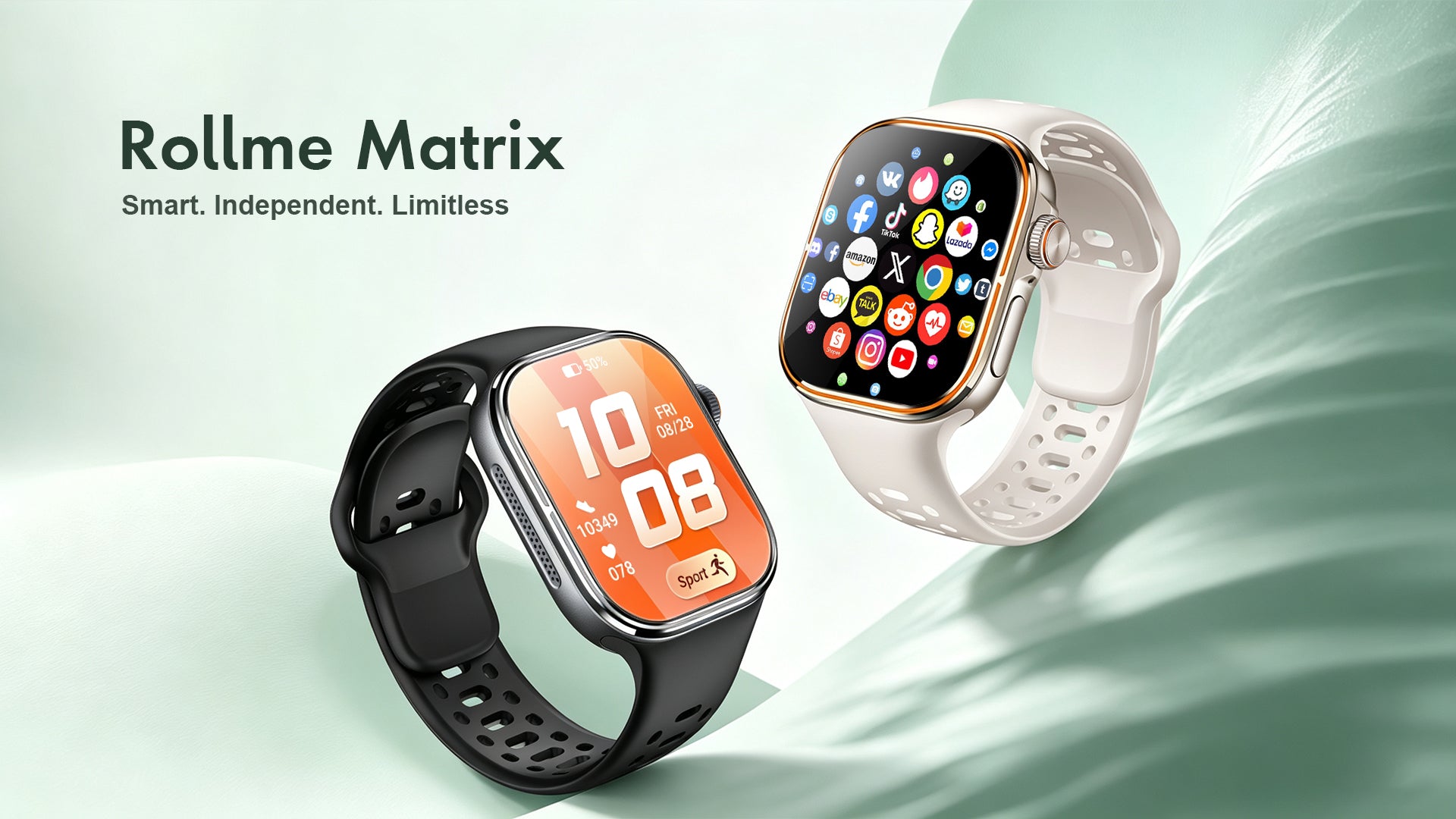
Rollme AI Watch 2 & Matrix 4G Series: ChatGPT Wrist Integration
Expanding beyond sports tracking, Rollme leads the commercial adoption of artificial intelligence on the wrist. The Rollme AI Watch 2 features a stunning 1.99-inch rectangular AMOLED HD display integrated with native cloud AI voice algorithms (including ChatGPT models).
Users can execute voice commands, draft intelligent quick replies for WhatsApp and Telegram, generate custom AI watch faces, and handle voice calls directly. For full cellular independence, the Rollme Matrix 4G AMOLED Smartwatch adds Android OS capability and 4G LTE SIM connectivity for standalone video calling and app deployment.
- 1.99" Large-Format AMOLED HD Screen
- Embedded ChatGPT AI Assistant Engine
- WhatsApp & Telegram Smart Quick Reply
- AI Watch Face Real-Time Generation
- Standalone 4G LTE Connectivity (Matrix Series)
- Bluetooth HD Voice Calling & Audio Stream
4. Future Sourcing & Procurement Trends for Enterprise Wearable Buyers (2026–2030)
Supply chain directors, retail category managers, and OEM project leaders must anticipate technological shifts to prevent inventory obsolescence. Over the next five years, the global AMOLED smartwatch market will be shaped by four macro procurement trends:
A. Pervasive Integration of On-Device Artificial Intelligence (Edge AI)
Cloud-reliant AI responses introduce latency and require continuous smartphone tethering. Future AMOLED smartwatches are rapidly adopting low-power Neural Processing Units (NPUs) integrated directly into the wearable SoC. Edge AI enables instant offline voice translation, predictive health metric analysis, and adaptive battery scheduling. Importers should prioritize suppliers capable of upgrading firmware to support on-device LLM inference.
B. Convergence of Non-Invasive Medical Sensors with AMOLED UIs
Consumer demand is expanding from basic step counts to continuous medical-grade health awareness. The inclusion of non-invasive blood glucose trend estimation, cuffless blood pressure monitoring, and single-lead ECG waveforms requires high-resolution display panels to present intricate health diagnostic graphs accurately. Manufacturers holding medical device registrations (such as Rollme’s dual NMPA medical certifications in China) offer significant compliance advantages for B2B buyers targeting regulated markets.
C. MicroLED vs. Advanced AMOLED Sourcing Cycles
While MicroLED technology promises even higher peak luminance, mass-production yield rates remain low, keeping component costs prohibitive for mainstream consumer retail. High-brightness AMOLED panels (utilizing tandem OLED stack structures and micro-lens arrays) will dominate mid-to-premium B2B procurement cycles through 2030, delivering 90% of MicroLED visual performance at a fraction of the bill-of-materials (BOM) cost.
D. Sustainable Materials & Modular Enclosure Engineering
Global ESG regulations (such as EU Right-to-Repair mandates and RoHS/REACH compliance) require wearable suppliers to adopt recyclable alloy housings, bio-based TPU/silicone straps, and modular PCB layouts that simplify battery servicing and electronic waste management.
5. Crucial Technical Evaluation Criteria & Quality Control Standards for Importers
Securing high-margin retail sales requires rigorous pre-shipment evaluation. When auditing an OEM factory for AMOLED smartwatches, engineering procurement managers must enforce five critical test protocols:
| Inspection Category | Engineering Standard | Testing Protocol & Equipment | B2B Quality Threshold |
|---|---|---|---|
| Display Quality & Uniformity | Zero Bright/Dead Pixel Policy | Spectroradiometer visual color calibration & luminance uniformity sweep across 100% RGB white/black screens. | <0.05% panel defective rate; Delta E < 2 color deviation. |
| Waterproof & Pressure Sealing | 5ATM (ISO 22810 standard) | Overpressure air leak chamber test followed by static water pressure immersion at 50 meters depth for 2 hours. | 100% factory unit pressure testing prior to enclosure shipping. |
| Thermal & Burn-In Aging | HTOL (High Temp Operating Life) | Continuous 48-hour burn-in inside environmental test chamber at 55°C with display running maximum nit output. | Zero panel yellowing, zero luminance decay, zero ghosting artifacts. |
| GNSS Tracking Accuracy | Dual-Band L1 + L5 Signal Lock | Drive testing through urban canyon environments and dense forest canopy with signal carrier-to-noise ratio (CNR) logging. | Positioning acquisition lock <15 seconds cold start; deviation <2.5m. |
| Battery Lifecycle & Safety | UN38.3, IEC 62133, CE/RoHS | 500-cycle charge/discharge test, nail penetration, thermal shock (-20°C to +60°C), and overcharge protection IC cut-off. | >85% capacity retention after 500 full charge cycles. |
6. Rollme Enterprise Edge: R&D Superiority, Patent Portfolio & Supply Assurance
Rollme operates at the forefront of smart wearable research, product design, and micro-electronics assembly. Unlike pure trading companies or white-label brokers, Rollme’s integrated manufacturing model is backed by continuous capital investment in proprietary intellectual property and industrial infrastructure.
Our engineering roadmap is anchored by over 10 core utility and technology patents governing display driver tuning, low-power GPS algorithm management, and advanced health sensor housing, alongside 50 industrial design patents protecting our distinctive casing geometry.
- CES 2024 Las Vegas Exhibitor: Demonstrated cutting-edge GPS and AI wearables to international tech buyers and media outlets.
- Dual Medical Certifications: Awarded 2 China medical device registrations (NMPA) for non-invasive diagnostic sensor hardware.
- Full-Stack OEM/ODM Services: Tailored PCBA layouts, custom firmware UI/UX development, localized packaging, and laser logo etching.
- Agile Production & Low RMA: Streamlined SMT lines achieve field return rates below 0.3% across global distribution networks.

7. Frequently Asked Questions (FAQ) for Global Wearable Importers & B2B Buyers
Why are global buyers shifting from TFT/LCD to AMOLED smartwatch displays in 2026?
AMOLED displays utilize self-emissive organic pixels, delivering true blacks, infinite contrast ratios, wider color gamuts, and superior outdoor readability under direct sunlight. From a power perspective, AMOLED panels allow for highly efficient Always-On Display (AOD) modes because unlit pixels draw zero electric current. This dramatically increases perceived consumer luxury, elevates product retail value, and reduces return rates for B2B brands.
How does Rollme ensure supply chain stability and quality control for high-resolution AMOLED panels?
Rollme maintains long-term strategic relationships with premier AMOLED glass foundries, guaranteeing stable monthly panel allocation even during global semiconductor shortages. Every panel undergoes 100% Automated Optical Inspection (AOI), color temperature grading, thermal stress aging, and full optical bonding (LOCA/OCA) to eliminate moisture entrapment, touch dead zones, and sub-pixel degradation.
Can Rollme customize software UI, firmware, and branding for OEM/ODM AMOLED smartwatch orders?
Yes. Rollme offers comprehensive B2B OEM/ODM customization options. Our in-house software engineering team can modify boot animations, embed proprietary watch face collections, configure localized language packs, integrate custom mobile app SDKs/APIs, laser-engrave corporate logos on watch enclosures, and print custom retail gift boxes according to your brand guidelines.
What is the typical battery performance of Rollme outdoor AMOLED smartwatches with active GPS?
Battery performance varies by model and battery density. For instance, our flagship Rollme Hero D6 incorporates an 850mAh high-density pure cobalt battery, delivering up to 30 days of standby time, 7 to 14 days under typical daily usage, and up to 36 hours of continuous dual-band satellite GPS tracking with display interaction. Power management algorithms dynamically throttle screen refresh rates to maximize operational runtime.
What international quality certifications do Rollme AMOLED smartwatches hold?
All Rollme AMOLED smartwatches comply fully with international market entry requirements, carrying CE, FCC, RoHS, and REACH certifications alongside certified 5ATM water-resistance test reports (ISO 22810 standard). Furthermore, our core sensor technology is backed by over 10 utility patents, 50 design patents, and select medical device registrations.
What is the typical MOQ and turn-around time for wholesale catalog requests and custom OEM sample orders?
Standard in-stock wholesale orders are available at flexible minimum order quantities (MOQs) with fast dispatch within 3 to 7 business days. Custom OEM/ODM sample evaluation units can be engineered and shipped within 14 business days following artwork and specification approval. Contact our global sales team via the request button to receive complete price tiering and technical catalogs.
Ready to Expand Your Smart Wearable Lineup?
Partner with Rollme to gain direct access to factory-direct AMOLED smartwatch technology, military GPS engineering, AI connectivity, and patent-protected designs. Request our latest wholesale product catalog and B2B pricing schedule today.